Bacillus subtilis; Volatil organic compounds; Green Fluorescent Protein; Secondary metabolites
Abstract :
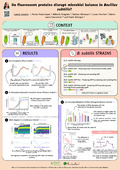
[en] In recent years, Bacillus subtilis has gained prominence as a microbial cell factory. Unlike Escherichia coli, which often forms inclusion bodies during recombinant protein production, B. subtilis naturally secretes proteins, making it an attractive chassis for industrial applications. Driven by the demand for efficient production platforms, engineering strategies have primarily focused on enhancing target functions, often overlooking the broader physiological consequences of genetic modifications once performance benchmarks are achieved.
This raises questions about commonly used tools like fluorescent proteins and their impact on metabolism and behavior of engineered strains. Widely used to monitor gene expression and population dynamics, these reporters impose transcriptional and translational burdens that can shift resource allocation, potentially altering metabolic activity. In particular, their effects on secondary metabolism and microbial interactions remain poorly understood.
We hypothesize that fluorescent protein expression does not significantly alter secondary metabolite production and microbial behavior in engineered B. subtilis strains. To test this, we compared metabolite profiles between the wild-type and four engineered strains expressing different reporters, analyzing both soluble metabolites and volatile organic compounds (VOCs) during continuous bioreactor cultivation.
Our results highlight the importance of considering metabolic side effects when using standard genetic tools in engineered microbial systems.
Disciplines :
Microbiology Chemistry
Author, co-author :
Josselin, Laurie ; Université de Liège - ULiège > Département GxABT > Microbial technologies
Howa Lopez, Fanny ; Université de Liège - ULiège > Département GxABT > Microbial technologies
Grégoire, Mélanie ; Université de Liège - ULiège > Département GxABT > Microbial technologies