Abstract :
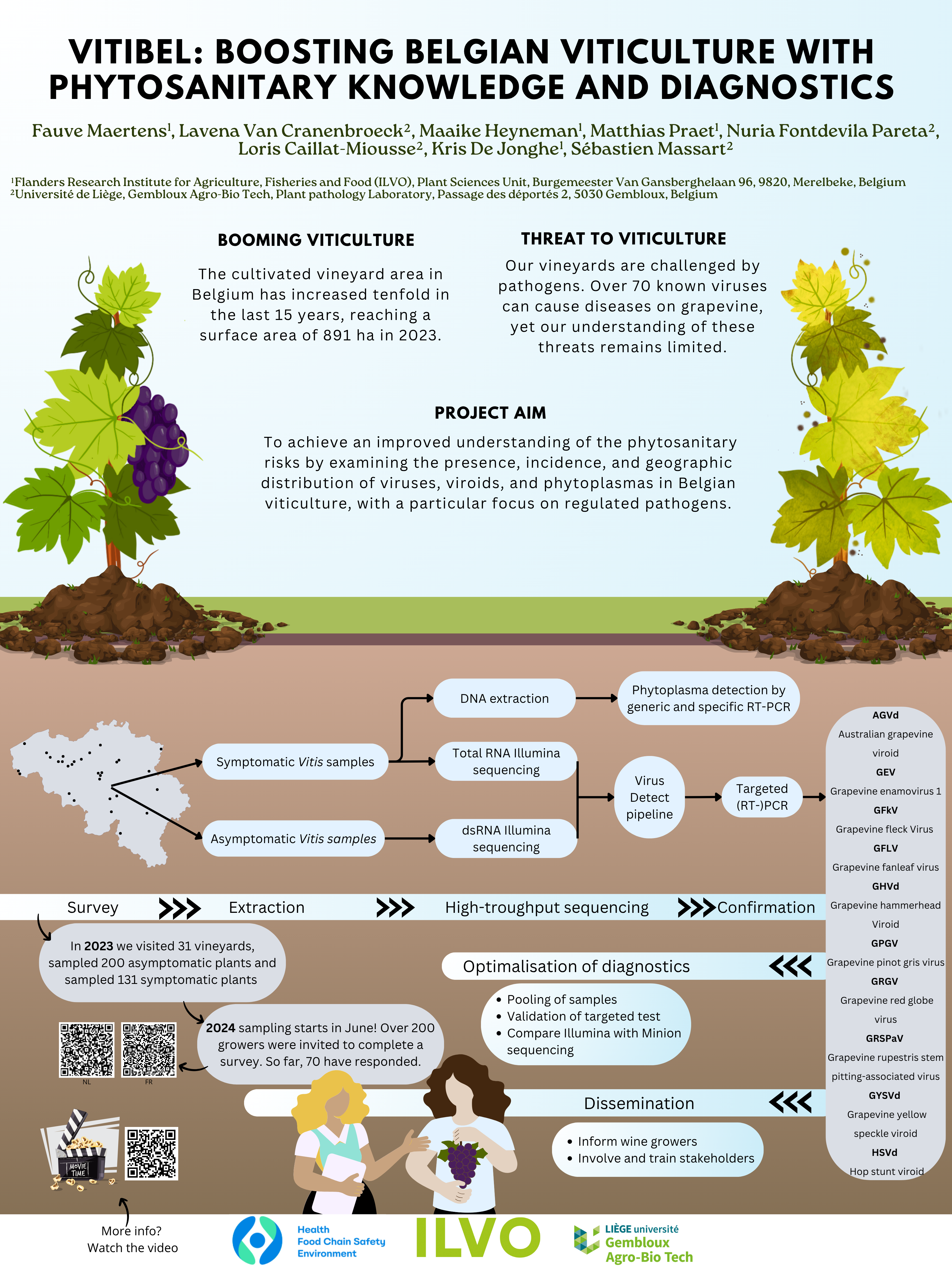
[en] Viticulture is growing rapidly in Belgium, however, this expansion raises phytosanitary concerns as vineyards are continuously threatened by various pathogens, including viruses, viroids, and bacteria. Some of these pathogens cause severe symptoms leading to substantial economic losses. Also, the potential introduction of pathogens of regulatory concern is a major threat for Vitis vinifera. The overall purpose of the project is to build more knowledge on phytosanitary risks for Belgian viticulture, with a specific focus on viruses, viroids and bacteria.
The first monitoring campaign in 31 vineyards involved symptom evaluation, sample collection, and virome scanning through Illumina sequencing (dsRNA based and total RNA based) for the viruses and viroids and metabarcoding (multilocus) using MinIon (ONT; Oxford nanopore sequencing technology) for phloem bacteria (phytoplasma, such as flavescence dorée and bois noir). In addition, specific molecular tests will be adapted from the literature or developed to confirm the detection of pests and, further on, to follow the epidemiology of the viruses and bacteria. Due to the challenges Vitis poses as an extraction matrix, extraction protocols are first optimized and adapted. The first samples from the survey have been sequenced and the bioinformatic pipelines are currently applied to identify the viruses present in the samples. The prevalence, and corresponding genetic diversity of the pathogens will be studied and compared with those in neighbouring countries, specifically in the nearby important wine growing areas (e.g. Mosel, Alsace, Champagne, Burgundy, Loire Valley). In addition to this baseline survey, VITIBEL aims to strengthen Belgian capacity to detect those regulated pests and to react to an outbreak through gathering relevant information, the appropriate training of inspectors and growers for symptom recognition, the selection and validation of reliable diagnostic tests, and the dissemination of information to stakeholders.
Funding text :
The research that yielded these results, was funded by the Belgian Federal Public Service Health, Food Chain Safety and Environment through the contract RF 23/22 VITIBEL