Poster (Scientific congresses and symposiums)
A microbial ecological approach to decipher PGPR-microbiota-plant interactions
Quiévreux, Martin; Michel, Elisa; De Clerck, Caroline et al.
2025Rhizosphere 6
 

Files


Full Text
Rhizospher 6_MQUIÉVREUX.pdf
Author postprint (4.05 MB)
Request a copy

All documents in ORBi are protected by a user license.

Send to


Details


Keywords :
PGPR; microbial ecology; soil microbiota; wheat
Abstract :
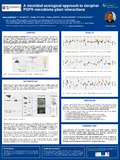
[en] Plant growth-promoting rhizobacteria (PGPR) enhance plant growth and crop resilience against biotic and abiotic stresses, offering a sustainable approach to agriculture. However, despite their commercialization, PGPR effectiveness remains inconsistent in field conditions. Beyond abiotic factors, their survival, proliferation, and bioactivity are shaped by interactions with native soil microbiota, an overlooked aspect that may explain variable field performance. While research on soil microbial ecology is expanding, no study has directly analyzed how contrasting microbiota influence PGPR growth, root colonization, and bioactivity. Current studies either focus on substrate sterilization effects (e.g., Torres et al., 2020, Appl. Soil Ecol.) or PGPR impacts on soil microbiota (e.g., Di Salvo et al., 2018, Appl. Soil Ecol.). This raises a key question: how do native microbial communities affect PGPR reliability? To address this, we conducted an experiment under gnotobiotic and non-gnotobiotic conditions, growing spring wheat on three agricultural soils inoculated with Bacillus velezensis strains. Results showed that PGPR significantly promoted plant growth in sterilized soils but that this effect diminished in the presence of native microbiota. We will discuss these findings, along with preliminary results from a broader study on wheat cultivation with 12 agricultural soils with diverse physico-chemical properties and management histories. Finally, we will present our methodological approach for deciphering PGPR-microbiota-plant interactions, aiming to improve PGPR application in real-world conditions.
Disciplines :
Microbiology
Agriculture & agronomy
Author, co-author :
Quiévreux, Martin   ;  Université de Liège - ULiège > Département GxABT > Microbial technologies ; Université de Liège - ULiège > Département GxABT > Plant Sciences ; ULiège - Université de Liège > Département GxABT > Gestion durable des bio-agresseurs
Michel, Elisa ;  Université de Liège - ULiège > Gembloux Agro-Bio Tech > Master bioing. : sc. agrono., à fin. spéc.
De Clerck, Caroline  ;  Université de Liège - ULiège > Département GxABT > Plant Sciences
Jacques, Philippe ;  Université de Liège - ULiège > Département GxABT > Microbial technologies
Massart, Sébastien   ;  Université de Liège - ULiège > Département GxABT > Gestion durable des bio-agresseurs
Delaplace, Pierre   ;  Université de Liège - ULiège > Département GxABT > Plant Sciences
 These authors have contributed equally to this work.
Language :
English
Title :
A microbial ecological approach to decipher PGPR-microbiota-plant interactions
Alternative titles :
[fr] Une approche en écologique microbienne pour décrypter les interactions PGPR-microbiote-plante
Publication date :
16 June 2025
Event name :
Rhizosphere 6
Event organizer :
University of Edinburgh
Event place :
Edinburgh, United Kingdom
Event date :
16/06/2024 - 19/06/2024
Audience :
International
Name of the research project :
Projet PHENIX Biocontrol ULiège-SPW
Funders :
FEDER - Fonds Européen de Développement Régional
Funding text :
This work was supported by the Walloon Region and the Fond Européen de Développement Régional (FEDER) [Grant portfolio PHENIX n°244, project PHENIX_Biocontrole_ULiege n°428]
Available on ORBi :
since 19 June 2025

Statistics


Number of views
131 (25 by ULiège)
Number of downloads
8 (8 by ULiège)

Bibliography


Similar publications


Contact ORBi