Abstract :
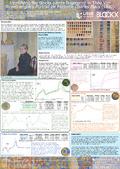
[en] The Belgian paint manufacturer Blockx is at the heart of a project led by the European Centre for Archaeometry (CEA). As part of this initiative, both documentary and material archives, compiled since the company’s founding in 1865, are being analyzed to gain a deeper insight into its history and the materials used in its products. These documents reveal paint orders placed by various artists, including Théo Van Rysselberghe (1862–1926), a key figure of Belgian Neo-Impressionism. His works are also being studied as part of the Face to Face project, which focuses on the technical analysis of facial representation in European painting from the 15th to the 20th century.
As part of this study, a corpus of nine paintings by Théo Van Rysselberghe was analyzed in situ using imaging methods (high-resolution photography, infrared reflectography, X-ray radiography, digital microscopy) and non-invasive analytical techniques (MA-XRF, Raman spectroscopy, hyperspectral imaging). This presentation focuses on the painting Portrait de Madame Charles Maus (1890), belonging to the collection of the Royal Museums of Fine Arts of Belgium (RMFAB), as it marks a turning point in the artist’s career, being one of his earliest pointillist works. Pointillism, typically executed with pure or minimally mixed colors and, in this case, without varnish. These elements facilitate the analysis and identification of the pigments used.
The objective of this study is to determine which specific paints from the Blockx range Van Rysselberghe used in his pictorial layer. To achieve this, data obtained from the painting are compared not only with a manufacturer’s color chart dating back to 1909 but also with three paint boards belonging to Emile Claus (1849–1924), a prominent Belgian painter and a leading figure of Luminism. These boards, all dated to 1909, contain paint swatches from both Blockx and Lefranc Bourgeois, a French paint manufacturer established in 1720. By analyzing and comparing these references, this study aims to highlight the distinctive fingerprint of Blockx paints in Portrait de Madame Charles Maus (1890).