Keywords :
Pythium, Phytophthora infestans, Plasmopara viticola, pest management, plant defenses elicitor
Abstract :
[en] Plant diseases caused by oomycetes, such as late blight and downy mildew, pose significant challenges in agriculture. While fungicides are commonly used, these products are associated with several drawbacks, including the risk of resistance development and adverse environmental impacts. Furthermore, current alternative approaches to control these diseases predominantly rely on copper-based treatments, which raise growing environmental concerns.
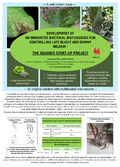
In response to these challenges, the AQUABIO start-up project focuses on the development of a novel bacterial species that has never been used in biocontrol. This bacterium shows promising potential as a biofungicide for controlling oomycete plant pathogens, including Pythium aphanidermatum as a model for root diseases and Phytophthora infestans as a model for foliar diseases. The primary objectives of the research were to elucidate the bacterium's mechanisms of action and evaluate its efficacy. The results highlight the bacterium’s multifaceted mechanisms, including cellulolytic enzyme production, extensive root surface colonization, and induction of plant defenses, offering over 80% protection against tomato late blight—an unprecedented level of efficacy in biocontrol agents. In addition to its impressive efficacy against oomycetes, the bacterium also targets other pathogens, such as Alternaria early blight on tomato leaf, broadening its application potential. Moreover, the bacterium's ability to colonize plant roots ensures prolonged protection.
Production trials demonstrated the feasibility of cultivating the bacterium at large scale, while formulation development focused on an innovative process that bypasses the costly freeze-drying step typically required for storage.
Ongoing field trials will further validate the agent’s effectiveness under practical conditions, with results expected to support its commercial adoption. The project’s outcomes underscore the technical and commercial viability of the biofungicide as a competitive, eco-friendly alternative to conventional fungicides, providing a solution to the growing demand for sustainable agricultural practices.