Abstract :
[en] Plant growth promoting rhizobacteria (PGPR) are bacteria that stimulate plant growth by colonizing the rhizosphere, and they can also play a key role in enhancing plant defence against (a)biotic stresses. PGPR offer a promising approach to develop more resilient and environmentally friendly agrosystems. However, although several microbial species have been commercialized as PGPR, their effects on plant performance are often not reliable in the field. Beyond the abiotic conditions, the strain ability to survive, multiply and express its beneficial properties is also impacted by its trophic relationship with the edaphic microbial communities (soil microbiota) and the microbial ecology rules. Research on understanding the interactions between the applied strain and the resident microbiota has been overlooked so far while it has the potential to unlock the current bottleneck of field application reliability.
As far as the study of interactions between soil microbiota and PGPR is concerned, there is a growing literature on soil microbial ecology, but, to our knowledge, there is currently no study analysing the impact of contrasting microbiota on PGPR growth, root colonization and/or bioactivity. So far, research on PGPR-microbiota interactions is either focused on investigating the influence of substrate sterilisation on PGPR bioactivity (e.g. Torres et al, 2020, in Appl. Soil Ecol.) or analysing the impacts of PGPR inoculation on soil microbiota properties (e.g. Di Salvo et al, 2018, Appl. Soil Ecol.). This raises the following question: how does the microbial communities in soils can affect PGPR reliability in the field?
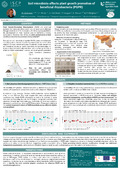
A first experiment was conducted under both gnotobiotic and non-gnotobiotic conditions, in which spring wheat was grown on three different agricultural soils and treated with three strains of Bacillus velezensis. The results demonstrated i) that strains promote plant growth, measured as biomass accumulation after 14 days, in sterilized soils, and ii) that plant growth promotion was negatively influenced by the presence of native microbiota compared to sterilized soils. Detailed findings will be presented, along with preliminary results from a broader study involving wheat cultivation under similar conditions on soil samples collected from 12 Walloon farms, exhibiting contrasted physico-chemical properties and management histories. Finally, an overview of our comprehensive approach and scaled methodology for gaining mechanistic and causal insights into the interactions between PGPR, soil microbiota, and plants will be shared with the audience.