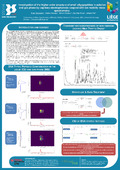
Investigation of the higher order structure of small oligopeptides in solution and gas phase by capillary electrophoresis coupled with ion mobility mass spectrometry. - 2024
Investigation of the higher order structure of small oligopeptides in solution and gas phase by capillary electrophoresis coupled with ion mobility mass spectrometry.
Capillary Electrophoresis; Mass Spectrometry; Ion mobility; Bio-active Peptide; Collision-Induced Unfolding
Abstract :
[en] Bioactive Peptides obtained from hydrolyzed proteins are nowadays of great interest in both the food and pharmaceutical industries for their wide range of therapeutical application [1]. These peptides, like proteins, derive their biological activity from their specific structure, including their three-dimensional conformation.
Capillary electrophoresis (CE) separates compounds by (averaged) charges and in-solution shape, described in terms of hydrodynamic radius. CE offers a powerful alternative to liquid chromatography (LC) for the separation of peptides potentially in non-denaturing condition, improving the detection of both highly hydrophilic and hydrophobic compounds while providing insights onto the structure of the analytes in solution [2].
Ion mobility spectrometry (IMS) is somewhat similar to CE but operates in the gas phase at moderate pressure. The ions are also separated by charge, this time induced by the electrospray ion source, as well as the ion shape, described in terms of collision cross section (CCS). Ion mobility coupled to mass spectrometry (IM-MS) improve the peak capacity of any separation methods coupled to MS depending on the degree of orthogonality between the separation technique and ion mobility. The recent development of interfaces allows nowadays for robust hyphenation of CE and ESI-MS and ESI-IM-MS instruments.
Peptides generated from BSA tryptic digest were separated by capillary zone electrophoresis (CZE) at different pH and detected on-line by ESI-IM-MS using a homemade sheath liquid microfluidic interface. We observed that, for some peptides, the conformation in solution and in the gas phase of unique peptide sharing the same charge state were not strictly correlated. Additionally, several conformers of the same peptide could be detected either in the gas phase, either in solution, either both, i.e. solution and gas phase These results suggest that the structure conservation hypothesis, which states that the structure of a specie is preserved by being kinetically trapped during the ESI process might not be true for oligopeptides containing less than 20 residues.
CZE coupled with IM-MS and collision induced unfolding (on helium) experiments were performed on some peptides. Our data suggest that conformation of oligopeptides could indeed be kinetically trapped conformations under our experimental conditions.
Research Center/Unit :
MolSys - Molecular Systems - ULiège
Disciplines :
Chemistry
Author, co-author :
Seyssens, Evan ; Université de Liège - ULiège > Molecular Systems (MolSys)
Delvaux, Cédric ; Université de Liège - ULiège > Molecular Systems (MolSys)
Eppe, Gauthier ; Université de Liège - ULiège > Département de chimie (sciences) > Laboratoire de spectrométrie de masse (L.S.M.)
Far, Johann ; Université de Liège - ULiège > Département de chimie (sciences) > Chimie analytique inorganique
Language :
English
Title :
Investigation of the higher order structure of small oligopeptides in solution and gas phase by capillary electrophoresis coupled with ion mobility mass spectrometry.
Publication date :
28 May 2024
Event name :
18th International Symposium on Hyphenated Techniques in Chromatography and Separation Technology 2024
Event organizer :
KU Leuven Continue
Event place :
Leuven, Belgium
Event date :
28 mai 2024
Audience :
International
Name of the research project :
Strategy for the characterization of linear and cyclic peptides by capillary electrophoresis coupled to mass spectrometry and ion mobility mass spectrometry
Funders :
SPW - Service Public de Wallonie
Funding number :
2210182
Funding text :
The research leading to these results has been funded by
the Public Service of Wallonia (Economy, Employment and
Research), under the FoodWal agreement n°2210182 from
the Win4Excellence project of the Wallonia Recovery Plan