Abstract :
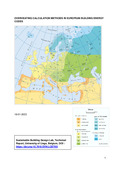
[en] The European Environment Agency predicts that the heatwaves will at least double between the first part of the century and the fifty last part. However, there is currently no standard European methods dealing with overheating. This study provides a review to understand the different regulations on overheating calculation methods for residential buildings to assure the well-being of people in residential buildings in European countries. It includes 26 European countries: Austria, Belgium, Bulgaria, Croatia, Cyprus, Czechia, Denmark, Estonia, France, Germany, Greece, Hungary, Ireland, Italy, Latvia, Lithuania, Netherlands, Poland, Portugal, Romania, Slovakia, Spain, Sweden, Norway, Switzerland, United Kingdom. These countries have been analyzed based on a set of criteria defined in the study to propose a methodology on a European scale for thermal comfort in summer. Results show that most countries don’t have strong regulations to fight thermal discomfort in summer. The study gives recommendations for European decision-makers, researchers, and industrialists to tackle the identified gaps to reach the European Commission’s goal.
Funding text :
We would like to acknowledge the Sustainable Building Design (SBD) Laboratory at the University of Liege to use the qualitative research protocols in this research and for valuable support during the group discussions and literature review analysis and for the access to the dataset and the use of monitoring equipment in this research and the valuable support during the experiments and the analysis of data.