The ULiège Open Science Steering Committee is organizing the fourth edition of Open Science Day on Thursday, November 12, 2026.
Join us for this unique opportunity to explore how research assessment is evolving and to exchange views with experts shaping the future of Open Science.
Please note that ORBi will be unavailable on Tuesday, September 29, from 9:00 a.m. to 9:30 a.m. due to a necessary update.
We recommend that you do not attempt to submit any references during this timeframe.
Adaptations to the Open Access decree, artificial intelligence, key figures... A look back at a year rich in advances, challenges, and prospects for Open Access. Discover how ORBi continues to evolve to better promote your publications and support your research.
This edition of Open Access Week is dedicated to researchers and their need for guidance through open access publication models and projects.
Join together, take action, and raise awareness about the importance of open knowledge sharing
Free participation, mandatory registration.
In April 2025, the IEEE (Institute of Electrical and Electronics Engineers) introduced its Repository License Fee (RLF). These new fees, applied when authors add a CC-BY license to their manuscript in order to deposit it in an open archive, amount to $1,275 for journal articles and $400 for conference proceedings. Alain Schuhl, the CNRS's Deputy CEO for Science (DGDS) at the CNRS, warns of the abuses associated with this practice and recommends that his researchers do not pay the RLF.
On July 8, the National Institutes of Health (NIH) announced a proposed new policy aimed at capping the publication fees that scientific publishers can charge researchers funded by the NIH. This measure seeks to curb excessive profits made at the expense of the scientific community by major publishers, particularly through the use of "hybrid" journal models. The proposal reinforces the NIH's commitment to Open Science and aligns with their goal of promoting transparent and universally accessible research.
ORBi's alignment with the requirements of the Open Access Decree of the Fédération Wallonie-Bruxelles, both in terms of the article deposit and the evaluation of researchers within the University of Liège.
This new platform addresses the F.R.S.-FNRS’s objective of enhancing the visibility and accessibility of scientific publications from the five universities of the Federation Wallonia-Brussels (FWB).
The University of Liège's Open Science Day, held on 7 November, brought together more than eighty participants to discuss innovative initiatives promoting the opening up of science to all. The event highlighted ULiège's commitments and the diversity of projects undertaken by its community, reflecting the impact of open science on research, education and society.
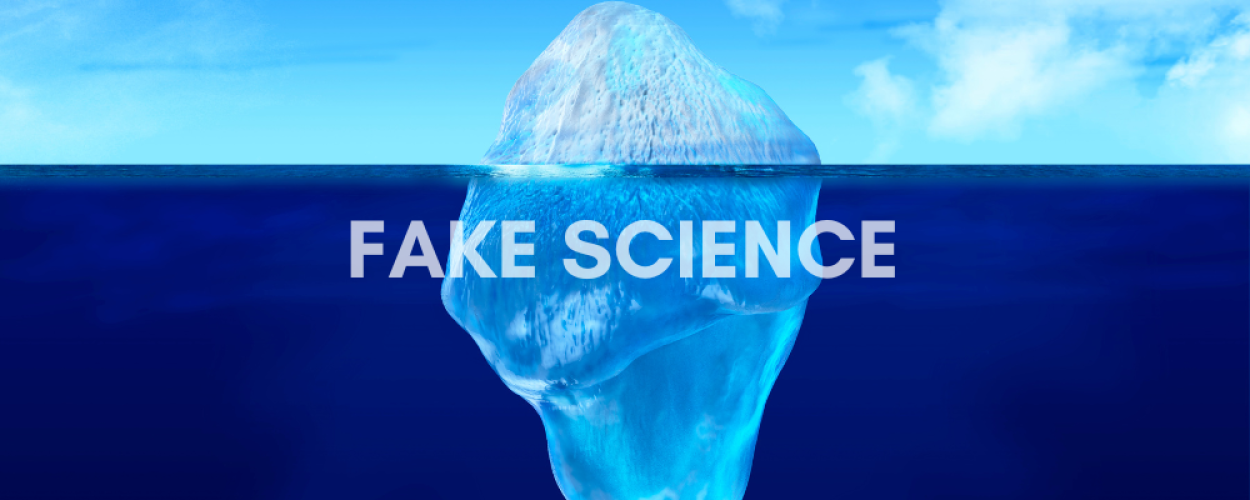
Last December, an article in Nature magazine announced that, in 2023 alone, 10,000 articles had been withdrawn from several scientific journals due to fraud. This figure is just the tip of the “Fake Science” iceberg.
The proliferation of questionable, if not fraudulent, articles calls into question the very relevance of the prevailing economic models for disseminating research.
€493,935 were paid by researchers in 2023 as APC (Article Processing Charges), an average of €2,297 per article! This represents an increase of 12.8% compared with 2022. Colossal sums lost for scientific research. However, solutions do exist to bring the bill down.
L'ULiège vous invite à la 2e édition de l'Open Science Day le 7 novembre 2024. Cet événement offre l'opportunité aux membres de la communauté ULiège d’échanger autour de leurs pratiques de Science Ouverte et de (re)découvrir certains outils, nouvelles fonctionnalités ou initiatives développées ou en chantier à l’ULiège en la matière.
Deux formats seront proposés : des présentations longues (20 min) pour explorer en profondeur des projets scientifiques, et des présentations flash (5 min) axées sur des solutions pratiques.