
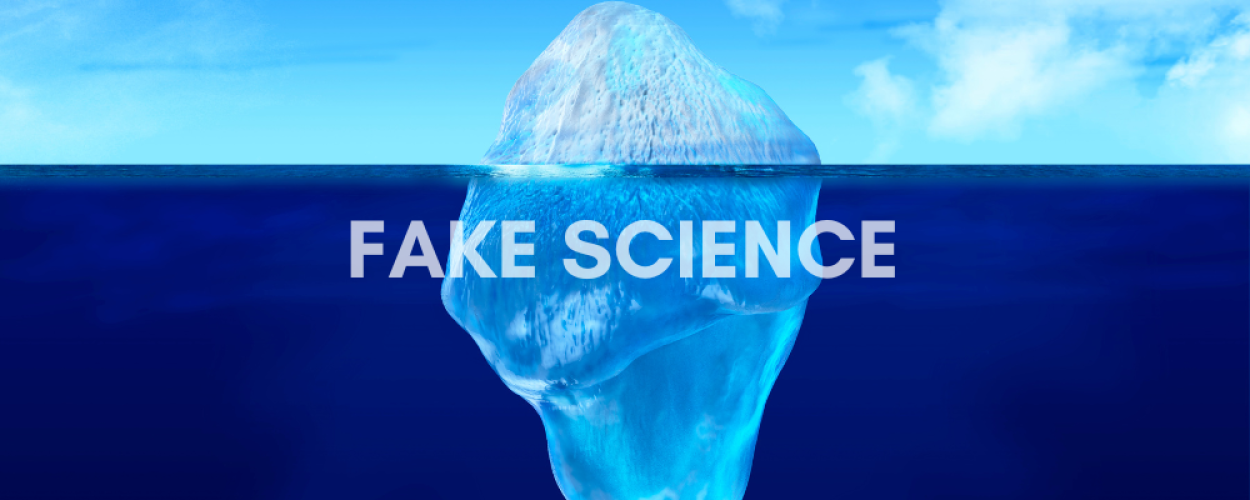
Last December, an article in Nature magazine announced that 10,000 papers had been withdrawn from several scientific journals for fraud in 2023 alone, despite the fact that they had undergone peer-review1.
8,000 of these 10,000 papers came from the catalog of Hindawi, a subsidiary of the London-based publisher Wiley. The publisher's reasons for its decision were “concerns about the peer-review process being compromised” and “systematic manipulation of the publication and peer-review process”. Since then, Wiley has suspended the Hindawi brand, and continued to publish the publisher's journals under a different label2.
Most of these retractions relate to special issues, which are often exploited by fraudsters to quickly publish mediocre and/or fictitious articles.
This practice tends to increase significantly, leading Richard Van Noorden, author of the article in Nature, to suggest that the 10,000 articles withdrawn are just the tip of the iceberg of publications propagating research that fails to comply with any form of scientific ethics, if not outright fraudulent.
Fortunately, the Université de Liège community seems to have been unaffected by this wave of article retractions, but vigilance is still called for, as the Hindawi-Wiley case echoes others.
Last year, for example, several universities announced that they were advising their researchers to stop publishing in certain MDPI and Frontiers journals, citing problems with the quality of the articles published there. At the same time, the Swiss National Science Foundation (SNSF) has decided to stop paying APCs for publications in special issues of journals3.
Artificial intelligence certainly offers ways of tracking down faulty and/or fraudulent papers, as Guillaume Cabanac's work at the University of Toulouse4 shows, but it also makes it easy to generate fake scientific articles.
A tool to guide you: Compass to publish
Compass to Publish helps you make your own diagnosis to assess the authenticity of Open Access journals that charge article processing charges (APCs).
Learn +The Hindawi-Wiley case also calls into question the relevance of the Open Access publication model involving the payment of APCs (Article Processing Charges), which is dominant among commercial publishers, and which in many ways appears to have reached the end of its rope5. This model consists in requiring authors of articles to pay increasingly high APCs, usually via their affiliated institutions and, in most cases, with public funds.
The significant increase in APCs in recent years, as well as the growing number of solicitations for publication from commercial publishers6, suggests that publishers are motivated at least as much by the pursuit of profit as by the scientific quality of the papers they publish. In some cases, profit is clearly favoured over any other criterion7.
Publish in Open Access
How to publish in Open Access? Which pitfalls should be avoided? What tools are essential for publishing in the right place?Confronted with this situation, it seems crucial for research actors (researchers, funding institutions, universities) to get involved in the development of alternative economic and ethical models for disseminating research, such as Diamond Open Access - a free model for authors AND readers.
The University of Liège, through ULiège Library, is committed to this approach, as demonstrated by its participation in the COARA inter-university project, funded by the Wallonia-Brussels Federation, which, among other objectives, aims to encourage the development of the Diamant ecosystem, a model made by researchers, for researchers.
Written by Jonathan Dumont (translated by ULiège Library)
