Abstract :
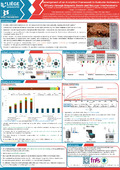
[en] Snake envenomation remains a major public health concern in Africa, the Middle East, Asia, and subtropical regions, particularly affecting rural communities. Each year, between 80,000 and 138,000 people die from snakebite envenomation, and three times as many suffer long-term disabilities despite treatment. For this reason, the World Health Organization has classified snakebite envenomation as a Category A neglected tropical disease. Although treatments are available, antivenoms remain the only therapeutic option currently on the market and suffer from several limitations. These purified sera contain not only toxin-specific IgGs but also non specific IgGs and, sometimes, additional serum proteins, which can sometimes trigger adverse reactions. Moreover, antivenoms are thermally unstable and difficult to store in regions where temperatures can be extreme. To address these issues, the European ADDovenom project (2021–2025, EC-FET-Open) aims to develop a new generation of antivenoms based on ADDomers: cost-efficient, thermally stable, megadalton-scale virus-like particles with 60 high-affinity binding sites, offering a promising alternative. In this study, we developed a new methodology for toxin identification, quantification, and affinity measurement using a fast and fully automatable workflow. Tosylactivated or Protein G magnetic beads were coupled to EchiTabG, a monospecific antivenom targeting Echis ocellatus toxins, and tested against E. romani, a related species described by Trape et al. in 2018. Eluates and supernatants were analyzed by LC-MS/MS after tryptic digestion to identify and quantify toxins immuno-recognized by EchiTabG. In parallel, biolayer interferometry (BLI) was used to measure the apparent dissociation constants of whole antivenoms against whole venoms, enabling comparison with alternative treatments such as nanobodies, monoclonal antibodies, or ADDobody-based structures. These fully automatable methods require minimal sample amounts and could be implemented in routine quality control workflows to improve antivenom efficacy assessment.
Name of the research project :
ADDovenom: Novel Snakebite Therapy Platform of Unparalleled Efficacy, Safety and Affordability