Abstract :
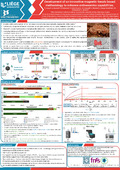
[en] Snake envenomation remains a critical yet neglected public health issue across Africa, the Middle East, Asia, and subtropical regions, affecting mostly rural populations. Despite the availability of antivenoms, their limitations, such as poor thermal stability, risk of adverse reactions, and ethical-concerned production relying on hyperimmunized animals, underscore the urgent need for innovative therapeutic approaches. The European ADDovenom project (2021–2025, FET-Open H2020) addresses these challenges by developing a new generation of antivenoms based on ADDomers: virus-like particles that are thermally stable, cost-effective, and capable of displaying 60 high-affinity binding sites. A major bottleneck in antivenom development and quality control lies in the limited information on the specific venom toxins targeted by antivenom antibodies. To overcome this, we present integrated, automatable workflows for captured toxin identification, quantification, and affinity assessment. Using tosylactivated or Protein G magnetic beads coupled to EchiTab G, a monospecific antivenom prepared to neutralize Echis ocellatus toxins, we probed its cross-reactivity with Echis romani. Toxins captured and uncaptured were analyzed via LC-MS/MS following tryptic digestion, enabling detailed mapping of the antivenom’s immunorecognition profile. Additionally, biolayer interferometry (BLI) was employed to determine the apparent dissociation constants of whole antivenoms against crude venoms, facilitating direct comparison with emerging alternatives like nanobodies, monoclonal antibodies, and Addobody constructs. These streamlined methods require minimal sample quantities, are fully automatable, and hold strong potential for routine application in antivenom quality control—paving the way toward more rational, targeted, and effective snakebite therapies.
Name of the research project :
ADDovenom: Novel Snakebite Therapy Platform of Unparalleled Efficacy, Safety and Affordability