Abstract :
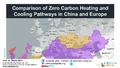
[en] This presentation provides a comparative overview of zero-carbon heating and cooling pathways in China and Europe, focusing on how geography, climate, urban form, and energy system structures condition feasible decarbonization strategies. It synthesizes recent policy targets, technology trends, and system-level evidence to highlight structural contrasts rather than promote a single solution. Europe’s building stock, shaped by nearly zero-energy standards and generally lower urban density, enables low-temperature heating systems, widespread district heating and cooling, and the effective use of shallow geothermal energy and seasonal thermal storage. In contrast, China faces exceptionally high and concentrated heat demand driven by dense high-rise cities, industrial processes, and regional disparities structured by the Hu Huanyong Line. These conditions favor higher-temperature district heating in northern regions and continued dominance of direct electric cooling in most cities. The presentation emphasizes the limits of transferring solutions across contexts, particularly regarding heat pump deployment, network scale, and microclimatic effects in dense urban environments. By contrasting heating and cooling pathways side by side, the presentation clarifies why zero-carbon strategies must be spatially differentiated, system-oriented, and aligned with urban morphology and resource availability. The insights support policymakers, urban planners, and researchers in designing realistic, region-specific transition pathways toward carbon-neutral buildings and communities.