Abstract :
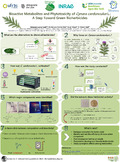
[en] Cynara cardunculus L. has attracted increasing attention as a potential source of bioherbicides, owing to its pronounced phytotoxic effects, which are largely attributed to its rich content in specialized secondary metabolites (Uddin et al., 2020). This study investigates the correlation between the metabolite profile of C. cardunculus and its herbicidal activity.
A systematic review of phytochemical data related to the aerial parts of C. cardunculus L. reveals a broad spectrum of allelopathic compounds, notably flavonoids and their glycosides, triterpenes, polyphenols, and sesquiterpene lactones (Scavo et al., 2019). Among these, sesquiterpene lactones such as cynaropicrin and grosheimin, as well as flavonoids like luteolin and apigenin, are recurrently identified as major contributors to the species’ phytotoxicity. Other compounds, including aguerin B, p-coumaric acid, and quercetin, may act synergistically to reinforce these effects (Rial et al., 2016; Kaab et al., 2020).
To complement the literature review, an experimental approach was conducted involving TLC and UHPLC-MS analysis of crude extracts from three distinct C. cardunculus genotypes. Extractions were carried out using conventional solvents, among which ethyl acetate proved most efficient in yielding bioactive fractions. This solvent enabled the recovery of a metabolite-rich extract displaying strong herbicidal activity, with key constituents including cynaropicrin, chlorogenic acid, luteolin, cynaroside, apigenin, aguerin B, cynarinin A/B, and p-coumaroylquinic acid. The wild genotype consistently exhibited the highest concentrations of these compounds.
The findings support a robust association between the phytotoxic potential of C. cardunculus and the abundance of specific secondary metabolites, particularly sesquiterpene lactones and flavonoids. These results underscore the relevance of chemotypic variability in determining bioactivity and offer a rational basis for targeted compound isolation.
Future research will focus on the optimization of extraction methods, the identification of additional active constituents, and the evaluation of compound synergies under pre-emergence conditions. This integrative approach is intended to support the development of C. cardunculus-based bioherbicides as sustainable and environmentally friendly alternatives to synthetic chemical herbicides.