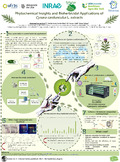
Poster (Scientific congresses and symposiums)Phytochemical Insights and Bioherbicidal Applications of Cynara cardunculus L. extracts
Yazidi, Mohamed Lamine; Akissi, Zachée Louis Evariste; Jijakli, Haissam et al.
2025 • 73rd International Congress and Annual Meeting of the Society for Medicinal Plant and Natural Product Research (GA), jointly with Italian Society of Phytochemistry (SIF)
Abstract :
[en] Cynara cardunculus L. extracts demonstrate notable phytotoxic effects against various weed species, largely attributed to its rich profile of bioactive secondary metabolites. This study aims to explore the relationship between the presence and concentration of these compounds and their herbicidal activity.
A comprehensive review of existing literature on the aerial parts of C. cardunculus L. reveals a diverse spectrum of allelopathic constituents, including flavonoids and their glucosides, triterpenes, polyphenols, sesquiterpene lactones. Among the most studied compounds, sesquiterpene lactones such as cynaropicrin and grosheimin, as well as flavonoids like luteolin and apigenin, stand out as key contributors to the plant's phytotoxicity. Compounds such as aguerin B, p-coumaric acid, and quercetin further enhance its allelopathic potential.
The phytochemical investigation combined a bibliographic analysis with experimental validation through TLC and UHPLC-MS across three C. cardunculus L. genotypes. Extracts were obtained using conventional solvents, with ethyl acetate yielding the most promising results. This extract exhibited high herbicidal activity and a rich composition of bioactive compounds, including cynaropicrin, chlorogenic acid, luteolin, cynaroside, apigenin, aguerin B, cynarinin A/B, and p-coumaroylquinic acid. The wild genotype displayed the highest metabolite concentrations.
These findings suggest a strong correlation between the herbicidal potential of C. cardunculus and the concentration of specific compounds. Future work will focus on optimizing extraction techniques, identifying additional active metabolites, and testing compound synergies under pre-emergence conditions. This approach supports the development of C. cardunculus-based bioherbicides for sustainable weed management.