Life cycle assessment, Ecodesign, Wood windows, Vaccum insulating glazing
Abstract :
[en] The building sector is responsible for almost 36% of CO2 emissions in Europe and 40% of energy consumption. This underlines the need to develop new solutions to support the strategy of reducing the energy needs of housing.
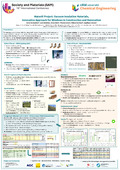
The objective of the MaIsoVi project (GreenWin n°8653) is to offer the construction and renovation market for the residential and commercial (tertiary) segment:
- A vacuum glazing (tempered FINEO) demonstrating the same or better energy efficiency than triple glazing but with the same weight as double glazing and the thickness of single glazing.
- A wooden window equipped with this FINEO and using a minimum of materials while guaranteeing the best performance over a maximum extended life span.
The implementation processes and the design of these products have been optimized to obtain a lower environmental footprint than the state of the art (triple glazed wooden window). The life cycle assessment (LCA) of the products and their processing is conducted during all the steps of the project to ensure the completion of this objective.
The tempered FINEO glazing is produced in the Walloon region at AGC site in Lodelinsart. The wooden frame is manufactured at Menuiserie Riche in Mariembourg, and the FINEO window is marketed in Belgium, a large part of France and neighboring countries. Two research centers, Materia Nova and Cenaero, have supported the development and characterization of the new products, and Liège University have conducted the LCA.
The first step of the LCA was the development of a friendly tool for the design of the wood window to explore different solutions without having to remodel the process, and to point out the potential parts leading to a reduction (or an increase!) of the global footprint, such as the design and the subsequent use of wood, or the wood species for the different parts.
Finally, the design of the frame has been optimized to select woods with a lower footprint, and to reduce the amount of wood necessary to produce the frame. The lifespan is increased by an innovative design with replaceable parts (instead of the whole frame).
The present paper is the continuation of the poster presented in SAM 17 conference in 2023 and shows the final results of the project.
This project is supported by the GreenWin Competition Clusters and subsidized by the Walloon Region (BE).
Disciplines :
Chemical engineering Environmental sciences & ecology
Author, co-author :
Groslambert, Sylvie ; Université de Liège - ULiège > Department of Chemical Engineering > PEPs - Products, Environment, and Processes
Hemberg, Axel; Materia Nova
Riche, Bruno; Menuiserie Riche
Lescot, Thomas; AGC Glass Europe SA
Van Hoof, Thibaut; Cenaero
Léonard, Angélique ; Université de Liège - ULiège > Department of Chemical Engineering > PEPs - Products, Environment, and Processes
Language :
English
Title :
MaIsoVi project Vacuum insulation materials, innovative approach for windows in construction and renovation
Publication date :
May 2025
Event name :
19th Society and Materials (SAM) International Conference
Event organizer :
SAM
Event date :
6-7/05/2025
Event number :
19
Audience :
International
Peer review/Selection committee :
Peer reviewed
Development Goals :
9. Industry, innovation and infrastructure 11. Sustainable cities and communities 12. Responsible consumption and production 13. Climate action