2025 • Colloque Scientifique Régional « One Health »: recherche synergique pour la santé, l’alimentation et la nutrition en Afrique de l’Ouest des enfants et des femmes en âge de procréer
human-wildlife interactions; Human-wildlife conflict; West Africa; coexistence; community perceptions; carnivore ecology
Abstract :
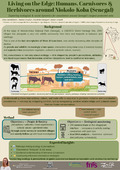
[en] In West Africa, human-wildlife interactions (HWIs) are intensifying due to the expansion of human activities, posing critical challenges for both biodiversity conservation and local well-being. Around Niokolo-Koba National Park (NKNP, Senegal), a UNESCO World Heritage Site, communities coexist with lions, leopards, hyenas, African wild dogs, warthogs, and baboons. These species often damage crops and livestock, threatening food security and the livelihoods of rural households. At the same time, some species carry cultural and symbolic values that remain largely undocumented in this region and may support resilience and coexistence.
The recent recovery of lion populations in NKNP raises key questions about their ecological role and their impacts on human livelihoods. Lions may contribute to regulating crop-raiding species such as warthogs and baboons, but their increasing numbers could also intensify conflicts through livestock predation.
This PhD research investigates the coexistence among local communities, carnivores, and herbivores using a transdisciplinary approach. Semi-structured surveys capture local perceptions, attitudes, and experiences, highlighting both the risks (crop and livestock losses) and potential benefits (ecosystem regulation, cultural significance) of wildlife. Simultaneously, camera traps placed at the park–village interface will monitor the spatial and temporal distribution of species. At the same time, genetic analyses of carnivore scats provide insights into diet, shedding light on their ecological roles and impacts on livestock. By comparing these data with those collected within the park’s core area, the project evaluates how human activities shape species distribution and predator feeding behavior.
By bridging social and ecological approaches, this research examines how HWIs directly impact food security, ecosystem balance, and community resilience. It illustrates the interdependence
between human, animal, and environmental health, thereby aligning with the One Health framework. Ultimately, the study aims to provide evidence to inform inclusive management strategies at the human–wildlife interface and contribute to sustainable coexistence in West African socio-ecological systems.
Disciplines :
Environmental sciences & ecology
Author, co-author :
Vanderbeck, Elise ; Université de Liège - ULiège > TERRA Research Centre > Gestion des ressources forestières
Drouilly Marine; Panthera
Denayer, Dorothée ; Université de Liège - ULiège > Département des sciences et gestion de l'environnement (Arlon Campus Environnement)
Lhoest, Simon ; Université de Liège - ULiège > Département GxABT > Gestion des ressources forestières
Language :
English
Title :
Living on the Edge Humans, Carnivores and Coexistence Around Niokolo-Koba (Senegal)
Publication date :
20 October 2025
Event name :
Colloque Scientifique Régional « One Health »: recherche synergique pour la santé, l’alimentation et la nutrition en Afrique de l’Ouest des enfants et des femmes en âge de procréer