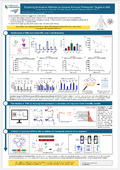
[en] Immune evasion remains a major challenge in acute myeloid leukemia (AML), contributing to relapse rates of up to 68% despite intensive chemotherapy and allogeneic hematopoietic cell transplantation. Immunotherapies targeting immune checkpoint molecules (ICMs) have shown highly variable efficacy in clinical trials, underscoring the need for more targeted approaches. This project aims to identify and characterize ICMs that allow AML cells surviving chemotherapy (persisters) to escape T-cell-mediated clearance, thereby promoting relapse. We hypothesize that persister cells express specific ICMs that shield them from T cell-elimination during remission. Our innovative three-phase approach begins by identifying ICM candidates through co-culturing 16 diverse AML cell lines with pre-activated allogeneic T cells, followed by bulk RNA-sequencing analysis and resistance score correlations to identify relevant ICM targets while avoiding stress-response artifacts. Preliminary findings reveal that AML resistance is associated with impaired T-cell proliferation, downregulation of activation markers (CD25, CD69, LAG3, PD-1), and contact-dependent killing. In phase two, we will refine the ICM candidate list using longitudinal single-cell RNA-sequencing published data from AML patients’ bone marrow at diagnosis and post-chemotherapy (days 14 and 30), along with survival analysis in 677 bulk RNA-sequencing patient datasets. Finally, the most promising membrane ICM candidates will be functionally validated via CRISPR knockout in AML cell lines, followed by co-culture assays. The therapeutic potential of the inhibition or silencing of our identified ICMs will be evaluated in humanized AML mouse models. This integrative approach bridges immunology, oncology, and genomics to develop novel immunotherapeutic strategies targeting the immune evasion mechanisms of AML persister cells.