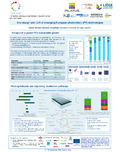
[en] In recent years, solar energy has become essential not only to reach the decarbonization targets set in Europe by the Green Deal but also for the REPowerEU plan.
Europe was a front runner in the manufacturing of solar panels at the beginning of this century. However, in recent years Europe’s solar industry has been facing an existential threat due to unfair competition with Chinese solar panels, offered below manufacturing costs. At the moment, 90% of solar panels installed in Europe come from China. Hence, at this critical moment for the European solar industry, it is essential to analyse the benefits of producing this technology in Europe as well as including the latest technical developments achieved.
To address this challenge, a life cycle assessment (LCA) is performed on the European patent technology silicon heterojunction–interdigitated back contact (SHJ-IBC). The main environmental hotspots are analysed and compared with other technologies already in the market. Furthermore, a comparative study is performed between production in Europe and China.
Eco-design and cradle-to-grave assessments are performed in accordance with ISO 14040-44 standards. EF 3.1 is used as the impact assessment method. Primary data is collected by industrial partners and research centres. Background data comes from Ecoinvent 3.10 database .
Main outcomes are the reduction of the environmental impact of the SHJ-IBC modules by new technological improvements such as using thinner wafers, reducing silver content or higher efficiencies, among other parameters. In addition, manufacturing location also plays a key role in the environmental footprint, due to the electricity mix used at each production stage. Considering, the origin of the photovoltaic modules is crucial to focus not only on the use phase but also the manufacturing and end-of-life stages.
This study shows the opportunities of novel European photovoltaic technologies and how their implementation at an industrial level could ensure a more sustainable energy transition.