Abstract :
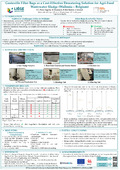
[en] Small and medium-sized enterprises (SMEs) in Wallonia’s agri-food sector face growing challenges in managing wastewater and sludge. Outdated treatment methods, increasing energy demands, and high disposal costs put pressure on these businesses, making it essential to find sustainable, modern solutions. This situation is especially pressing given the importance of the agri-food industry, which contributes 20.8% of the region’s industrial revenue. To address these issues, the CEBEDEAU Research Center and the University of Liège jointly proposed the project Projet Eau & Matière et Circularité dans les PME. This project aims to develop cost-effective, low-tech solutions that enhance sustainability in wastewater treatment and explore new approaches to sludge management, specifically targeting agri-food SMEs.
One principal objective is the evaluation of geotextile filter bags as a rapid and cost-effective solution for dewatering agri-food sludge. Geotextiles have consistently delivered positive results across various environmental and industrial applications, including wastewater treatment, construction, landfill leachate management, and agriculture. For instance, geotextile filter bags have demonstrated high efficiency in moisture reduction and volume minimization of residual waste, providing a simple, low-energy solution for industries needing effective sludge dewatering with minimal operational complexity.
Initial laboratory trials will focus on selecting the most suitable geotextile material based on key criteria such as cost, filtration capacity, and environmental compliance, among others, ensuring it meets the filtration standards required. After material selection, pilot systems will be designed for in-situ testing to assess the performance of these filter bags in real industrial settings, using sludge from diverse sources, including dairies, breweries, and meat-processing facilities.
Upon completing laboratory and field trials, this project will provide a scalable methodology to facilitate sludge dewatering across various industrial settings, tailored to meet the unique needs of Wallonia’s agri-food SMEs. The outcomes of this initiative will include a flexible, adaptable guide for integrating geotextile filter bags into sludge management practices, reducing the environmental footprint of wastewater treatment, lowering operational costs, and fostering sustainable sludge management aligned with circular economy principles. This approach represents an innovative, practical solution to support the region’s SMEs in achieving both economic and environmental sustainability.