Energy modeling; Energy planning; Hydro availability; ENSO events; Climate change; Bolivia
Abstract :
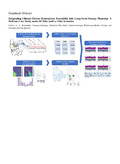
[en] As climate change effects become more evident worldwide, particularly regarding the variation in hydro resources availability, quantifying their potential impacts is critical to enable adequate adaptation strategies and facilitate planning efforts. In this sense, countries heavily reliant on hydropower must assess and integrate the implications of this variability to ensure a reliable electricity supply. Considering Bolivia as a case study, the impact of alternative hydro availability scenarios is evaluated through the analysis of extreme weather conditions associated with El Niño and La Niña events. To this end, a modeling framework is presented that combines global precipitation projections downscaled to a local level, with which three scenarios (Control, El Niño, and La Niña) are developed for 2030, 2040, and 2050. These scenarios are later analyzed using a cost-optimization energy model tailored to Bolivia, developed with PyPSA-Earth, which allows the representation of region-specific conditions with hourly resolution, both for hydro resources availability and electrical components. Results indicate that both El Niño and La Niña events can reduce hydropower availability significantly, by up to 37 % compared to average years, with neither of them being strictly linked to a higher reduction in hydropower generation. Regarding the operation of the system, it is seen that Bolivia’s legacy power plants can handle hydrological variability until 2040. However, the decommissioning of fossil capacity by 2050 significantly increases system vulnerability. As a result, deployment of flexible technologies and battery storage will play a key role in addressing both long-term capacity adequacy and short-term flexibility.
IPCC. oCLC: ocn132298563 Climate Change 2007: the physical science basis: contribution of working group I to the fourth assessment report of the intergovernmental panel on Climate Change, 2007, Cambridge University Press, Cambridge; New York.
IPCC. Climate Change 2023: synthesis report. Contribution of working groups I, II and III to the Sixth Assessment report of the intergovernmental panel on Climate Change [core writing team, H. Lee and J. Romero (eds.)]. IPCC, Geneva, Switzerland. Tech. rep., 2023 Jul, Intergovernmental Panel on Climate Change (IPCC), 10.59327/IPCC/AR6-9789291691647 edition: First https://www.ipcc.ch/report/ar6/syr/.
Tarroja, B., Forrest, K., Chiang, F., AghaKouchak, A., Samuelsen, S., Implications of hydropower variability from climate change for a future, highly-renewable electric grid in California. Appl Energy 237 (2019), 353–366, 10.1016/j.apenergy.2018.12.079 https://www.sciencedirect.com/science/article/pii/S030626191831897X.
Suomalainen, K., Wen, L., Sheng, M.S., Sharp, B., Climate change impact on the cost of decarbonisation in a hydro-based power system. Energy, 246, 2022, 123369, 10.1016/j.energy.2022.123369 https://www.sciencedirect.com/science/article/pii/S0360544222002729.
Santos, J.L., The impact of El niño - southern oscillation events on South America. Adv Geosci 6 (2006), 221–225, 10.5194/adgeo-6-221-2006 https://adgeo.copernicus.org/articles/6/221/2006/.
Albrecht, T.R., Crootof, A., Scott, C.A., The water-energy-food nexus: a systematic review of methods for nexus assessment. Environ Res Lett, 13(4), 2018, 043002, 10.1088/1748-9326/aaa9c6 https://iopscience.iop.org/article/10.1088/1748-9326/aaa9c6.
Van Vliet, M.T.H., Wiberg, D., Leduc, S., Riahi, K., Power-generation system vulnerability and adaptation to changes in climate and water resources. Nat Clim Change 6:4 (2016), 375–380, 10.1038/nclimate2903 https://www.nature.com/articles/nclimate2903.
Yalew, S.G., Van Vliet, M.T.H., Gernaat, D.E.H.J., Ludwig, F., Miara, A., Park, C., et al. Impacts of climate change on energy systems in global and regional scenarios. Nat Energy 5:10 (2020), 794–802, 10.1038/s41560-020-0664-z https://www.nature.com/articles/s41560-020-0664-z.
Panteli, M., Mancarella, P., Influence of extreme weather and climate change on the resilience of power systems: impacts and possible mitigation strategies. Electr Power Syst Res 127 (2015), 259–270, 10.1016/j.jpgr.2015.06.012 https://linkinghub.elsevier.com/retrieve/pii/S037877961500187X.
Cai, W., Borlace, S., Lengaigne, M., Van Rensch, P., Collins, M., Vecchi, G., et al. Increasing frequency of extreme El Niño events due to greenhouse warming. Nat Clim Change 4:2 (2014), 111–116, 10.1038/nclimate2100 https://www.nature.com/articles/nclimate2100.
Cai, W., Wang, G., Santoso, A., McPhaden, M.J., Wu, L., Jin, F.-F., et al. Increased frequency of extreme La Niña events under greenhouse warming. Nat Clim Change 5:2 (2015), 132–137, 10.1038/nclimate2492 https://www.nature.com/articles/nclimate2492.
Craig, M.T., Wohland, J., Stoop, L.P., Kies, A., Pickering, B., Bloomfield, H.C., et al. Overcoming the disconnect between energy system and climate modeling. Joule 6:7 (2022), 1405–1417, 10.1016/j.joule.2022.05.010 https://linkinghub.elsevier.com/retrieve/pii/S2542435122002379.
Abadie, L.M., Chamorro, J.M., Huclin, S., Ven, D.-J.V.D., On flexible hydropower and security of supply: Spain beyond 2020. publisher: Elsevier BV Energy, 203, 2020, 117869, 10.1016/j.energy.2020.117869 https://linkinghub.elsevier.com/retrieve/pii/S0360544220309762.
De Silva, T., Jorgenson, J., Macknick, J., Keohan, N., Miara, A., Jager, H., et al. Hydropower operation in future power grid with various renewable power integration. publisher: Elsevier BV Renew Energy Focus 43 (2022), 329–339, 10.1016/j.ref.2022.11.001 https://linkinghub.elsevier.com/retrieve/pii/S1755008422000898.
Hidalgo, I.G., Paredes-Arquiola, J., Andreu, J., Lerma-Elvira, N., Lopes, J.E.G., Cioffi, F., Hydropower generation in future climate scenarios. publisher: Elsevier BV Energy Sustain Dev 59 (2020), 180–188, 10.1016/j.esd.2020.10.007 https://linkinghub.elsevier.com/retrieve/pii/S0973082620303161.
Bloomfield, H.C., Gonzalez, P.L.M., Lundquist, J.K., Stoop, L.P., Browell, J., Dargaville, R., et al. The importance of weather and climate to energy systems: a workshop on next generation challenges in energy–climate modeling. Bull Am Meteorol Soc 102:1 (2021), 159–167, 10.1175/BAMS-D-20-0256.1 https://journals.ametsoc.org/view/journals/bams/102/1/BAMS-D-20-0256.1.xml.
Fallon, J.C., Bloomfield, H.C., Brayshaw, D.J., Sparrow, S.N., Wallom, D.C.H., Woollings, T., et al. Understanding climate risk in future energy systems: an energy–climate data hackathon. Bull Am Meteorol Soc 103:5 (2022), 1321–1329, 10.1175/BAMS-D-21-0305.1 https://journals.ametsoc.org/view/journals/bams/103/5/BAMS-D-21-0305.1.xml.
Singh, V.K., Singal, S.K., Operation of hydro power plants-a review. Renew Sustain Energy Rev 69 (2017), 610–619, 10.1016/j.rser.2016.11.169 https://www.sciencedirect.com/science/article/pii/S1364032116309200.
Fang, F., Karki, R., Reliability implications of riverflow variations in planning hydropower systems. 2018 IEEE Conference on Technologies for Sustainability (SusTech), 2018, 1–6, 10.1109/SusTech.2018.8671365.
Sternberg, R., Hydropower's future, the environment, and global electricity systems. Renew Sustain Energy Rev 14:2 (2010), 713–723, 10.1016/j.rser.2009.08.016 https://www.sciencedirect.com/science/article/pii/S1364032109002160.
Marshall, A.M., Grubert, E., Hydroelectricity modeling for low-carbon and no-carbon grids: empirical operational parameters for optimization and dispatch models. Earth's Future, 10(8), 2022, e2021EF002503, 10.1029/2021EF002503 https://agupubs.onlinelibrary.wiley.com/doi/10.1029/2021EF002503.
Yates, D., Sieber, J., Purkey, D., Huber-Lee, A., WEAP21—a demand-, priority-, and preference-driven water planning model: part 1: model characteristics. publisher: Routledge _eprint Water Int 30:4 (2005), 487–500, 10.1080/02508060508691893.
Alsaleh, M., Abdul-Rahim, A.S., Does hydropower production influence agriculture industry growth to achieve sustainable development in the EU economies?. Environ Sci Pollut Res 30:5 (2022), 12825–12843, 10.1007/s11356-022-22583-y https://link.springer.com/10.1007/s11356-022-22583-y.
Alsaleh, M., Abdul-Rahim, A.S., The pathway toward pollution mitigation in EU28 region: does hydropower growth make a difference?. Renew Energy 185 (2022), 291–301, 10.1016/j.renene.2021.12.045 https://linkinghub.elsevier.com/retrieve/pii/S0960148121017651.
Wang, X., Alsaleh, M., Abdul-Rahim, A.S., The role of information and communication technologies in achieving hydropower sustainability: evidence from European Union economies. Energy Environ 35:3 (2024), 1550–1572, 10.1177/0958305X221137566 https://journals.sagepub.com/doi/10.1177/0958305X221137566.
Wasti, A., Ray, P., Wi, S., Folch, C., Ubierna, M., Karki, P., Climate change and the hydropower sector: a global review. WIREs Clim Change, 13(2), 2022, e757, 10.1002/wcc.757 https://wires.onlinelibrary.wiley.com/doi/10.1002/wcc.757.
Craig, M.T., Cohen, S., Macknick, J., Draxl, C., Guerra, O.J., Sengupta, M., et al. A review of the potential impacts of climate change on bulk power system planning and operations in the United States. Renew Sustain Energy Rev 98 (2018), 255–267, 10.1016/j.rser.2018.09.022 https://www.sciencedirect.com/science/article/pii/S1364032118306701.
Van Vliet, M.T.H., Van Beek, L.P.H., Eisner, S., Flörke, M., Wada, Y., Bierkens, M.F.P., Multi-model assessment of global hydropower and cooling water discharge potential under climate change. Glob Environ Change 40 (2016), 156–170, 10.1016/j.gloenvcha.2016.07.007 https://linkinghub.elsevier.com/retrieve/pii/S0959378016301236.
Turner, S.W.D., Hejazi, M., Kim, S.H., Clarke, L., Edmonds, J., Climate impacts on hydropower and consequences for global electricity supply investment needs. Energy 141 (2017), 2081–2090, 10.1016/j.energy.2017.11.089 https://www.sciencedirect.com/science/article/pii/S0360544217319473.
Caretta, M.A., Mukherji, A., Water, in: Intergovernmental Panel on Climate Change (IPCC) (Ed.). Climate Change 2022 – impacts, adaptation and vulnerability: working group II contribution to the Sixth Assessment report of the Intergovernmental Panel on Climate Change. Cambridge: Cambridge University Press; 2023. pp. 551–712. https://www.cambridge.org/core/books/climate-change-2022-impacts-adaptation-and-vulnerability/water/7A49785973EC54E41371F6F36D471D94, 10.1017/9781009325844.006.
Ly, S., Sayama, T., Try, S., Integrated impact assessment of climate change and hydropower operation on streamflow and inundation in the lower Mekong Basin. Prog Earth Planet Sci, 10(1), 2023, 55, 10.1186/s40645-023-00586-8 https://progearthplanetsci.springeropen.com/articles/10.1186/s40645-023-00586-8.
Almulla, Y., Zaimi, K., Fejzić, E., Sridharan, V., De Strasser, L., Gardumi, F., Hydropower and climate change, insights from the integrated water-energy modelling of the Drin basin. Energy Strateg Rev, 48, 2023, 101098, 10.1016/j.esr.2023.101098 https://linkinghub.elsevier.com/retrieve/pii/S2211467X23000482.
Willems, P., Vrac, M., Statistical precipitation downscaling for small-scale hydrological impact investigations of climate change. J Hydrol 402:3 (2011), 193–205, 10.1016/j.jhydrol.2011.02.030 https://www.sciencedirect.com/science/article/pii/S0022169411001582.
Mendoza Paz, S., Generacion de series de tiempo climaticas futuras del proyecto ares PRD: modelos de sistemas energÉticos a medida para la planificaciÓn energÉtica en Bolivia., 2024 Sep., Universidad Mayor de San Simón, Centro Universitario de Investigación en Energías (CUIE), 10.5281/zenodo.13820029.
Mora, D.E., Campozano, L., Cisneros, F., Wyseure, G., Willems, P., Climate changes of hydrometeorological and hydrological extremes in the Paute basin, ecuadorean Andes. Hydrol Earth Syst Sci 18:2 (2014), 631–648, 10.5194/hess-18-631-2014 https://hess.copernicus.org/articles/18/631/2014/.
Núñez Mejía, S., Villegas-Lituma, C., Crespo, P., Córdova, M., Gualán, R., Ochoa, J., et al. Downscaling precipitation and temperature in the Andes: applied methods and performance—a systematic review protocol. Environ Evid, 12(1), 2023, 29, 10.1186/s13750-023-00323-0 https://environmentalevidencejournal.biomedcentral.com/articles/10.1186/s13750-023-00323-0.
Othman, M.E.F., Sidek, L.M., Basri, H., El-Shafie, A., Ahmed, A.N., Climate challenges for sustainable hydropower development and operational resilience: a review. Renew Sustain Energy Rev, 209, 2025, 115108, 10.1016/j.rser.2024.115108 https://www.sciencedirect.com/science/article/pii/S1364032124008347.
Núñez Mejía, S.X., Mendoza Paz, S., Tabari, H., Willems, P., Climate change impacts on hydrometeorological and river hydrological extremes in Quito, Ecuador. J Hydrol Reg Stud, 49, 2023, 101522, 10.1016/j.ejrh.2023.101522 https://www.sciencedirect.com/science/article/pii/S2214581823002094.
Fernandes, G., Gomes, L.L., Brandão, L.E.T., A risk-hedging tool for hydro power plants. Renew Sustain Energy Rev 90 (2018), 370–378, 10.1016/j.rser.2018.03.081 https://www.sciencedirect.com/science/article/pii/S1364032118301771.
Pulgarín-Morales, L., Krueger, T., ENSO effects on hydropower and climate adaptation strategies in four Colombian case studies. J Hydrol Reg Stud, 60, 2025, 102599, 10.1016/j.ejrh.2025.102599 https://linkinghub.elsevier.com/retrieve/pii/S2214581825004240.
Solaun, K., Cerdá, E., Climate change impacts on renewable energy generation. A review of quantitative projections. Renew Sustain Energy Rev, 116, 2019, 109415, 10.1016/j.rser.2019.109415 https://www.sciencedirect.com/science/article/pii/S1364032119306239.
Mekonnen, T.W., Teferi, S.T., Kebede, F.S., Anandarajah, G., Assessment of impacts of climate change on hydropower-dominated power system—the case of Ethiopia. Appl Sci, 12(4), 2022, 1954, 10.3390/app12041954 https://www.mdpi.com/2076-3417/12/4/1954.
Teotónio, C., Fortes, P., Roebeling, P., Rodriguez, M., Robaina-Alves, M., Assessing the impacts of climate change on hydropower generation and the power sector in Portugal: a partial equilibrium approach. Renew Sustain Energy Rev 74 (2017), 788–799, 10.1016/j.rser.2017.03.002 https://www.sciencedirect.com/science/article/pii/S1364032117303209.
Catania, M., Parolin, F., Fattori, F., Colbertaldo, P., The role of hydropower in decarbonisation scenarios. Renew Energy, 236, 2024, 121411, 10.1016/j.renene.2024.121411 https://www.sciencedirect.com/science/article/pii/S0960148124014794.
Berga, L., The role of hydropower in climate change mitigation and adaptation: a review. Engineering 2:3 (2016), 313–318, 10.1016/J.ENG.2016.03.004 https://www.sciencedirect.com/science/article/pii/S209580991631164X.
de Queiroz, A.R., Marangon Lima, L.M., Marangon Lima, J.W., da Silva, B.C., Scianni, L.A., Climate change impacts in the energy supply of the Brazilian hydro-dominant power system. Renew Energy 99 (2016), 379–389, 10.1016/j.renene.2016.07.022 https://www.sciencedirect.com/science/article/pii/S0960148116306188.
Guerra, O.J., Tejada, D.A., Reklaitis, G.V., Climate change impacts and adaptation strategies for a hydro-dominated power system via stochastic optimization. Appl Energy 233-234 (2019), 584–598, 10.1016/j.apenergy.2018.10.045 https://www.sciencedirect.com/science/article/pii/S0306261918315915.
Carvajal, P.E., Li, F.G.N., Soria, R., Cronin, J., Anandarajah, G., Mulugetta, Y., Large hydropower, decarbonisation and climate change uncertainty: modelling power sector pathways for Ecuador. Energy Strateg Rev 23 (2019), 86–99, 10.1016/j.esr.2018.12.008 https://www.sciencedirect.com/science/article/pii/S2211467X18301202.
De Queiroz, A.R., Stochastic hydro-thermal scheduling optimization: an overview. Renew Sustain Energy Rev 62 (2016), 382–395, 10.1016/j.rser.2016.04.065 https://linkinghub.elsevier.com/retrieve/pii/S1364032116300983.
Alsaleh, M., Abdulwakil, M.M., Abdul-Rahim, A.S., Land-use change impacts from sustainable hydropower production in EU28 region: an empirical analysis. Sustainability, 13(9), 2021, 4599, 10.3390/su13094599 https://www.mdpi.com/2071-1050/13/9/4599.
Soito, J.L.D.S., Freitas, M.A.V., Amazon and the expansion of hydropower in Brazil: vulnerability, impacts and possibilities for adaptation to global climate change. Renew Sustain Energy Rev 15:6 (2011), 3165–3177, 10.1016/j.rser.2011.04.006 https://www.sciencedirect.com/science/article/pii/S1364032111001432.
Zhang, Y., Cheng, C., Yang, T., Jin, X., Jia, Z., Shen, J., et al. Assessment of climate change impacts on the hydro-wind-solar energy supply system. Renew Sustain Energy Rev, 162, 2022, 112480, 10.1016/j.rser.2022.112480 https://linkinghub.elsevier.com/retrieve/pii/S1364032122003847.
Henao, F., Viteri, J.P., Rodríguez, Y., Gómez, J., Dyner, I., Annual and interannual complementarities of renewable energy sources in Colombia. Renew Sustain Energy Rev, 134, 2020, 110318, 10.1016/j.rser.2020.110318 https://www.sciencedirect.com/science/article/pii/S1364032120306067.
Moss, R.H., Edmonds, J.A., Hibbard, K.A., Manning, M.R., Rose, S.K., Van Vuuren, D.P., et al. The next generation of scenarios for climate change research and assessment. Nature 463:7282 (2010), 747–756, 10.1038/nature08823 https://www.nature.com/articles/nature08823.
Calvin, K., Al., E., IPCC, 2023: climate change 2023: synthesis report. contribution of working groups I, II and III to the Sixth assessment report of the intergovernmental panel on Climate Change [core writing team, H. Lee and J. Romero (eds.)]. IPCC, Geneva, Switzerland. Tech. rep., 2023 Jul., Intergovernmental Panel on Climate Change (IPCC), 10.59327/IPCC/AR6-9789291691647 edition: First https://www.ipcc.ch/report/ar6/syr/.
Ng, J.Y., Turner, S.W.D., Galelli, S., Influence of el niño southern oscillation on global hydropower production. Environ Res Lett, 12(3), 2017, 034010, 10.1088/1748-9326/aa5ef8 https://dx.doi.org/10.1088/1748-9326/aa5ef8.
Gøtske, E.K., Victoria, M., Future operation of hydropower in Europe under high renewable penetration and climate change. publisher: Elsevier BV iScience, 24(9), 2021, 102999, 10.1016/j.isci.2021.102999 https://linkinghub.elsevier.com/retrieve/pii/S2589004221009676.
Hörsch, J., Hofmann, F., Schlachtberger, D., Brown, T., PyPSA-Eur: an open optimisation model of the European transmission system. Energy Strateg Rev 22 (2018), 207–215, 10.1016/j.esr.2018.08.012.
Brown, T., Hörsch, J., Schlachtberger, D., PyPSA: Python for power system analysis. J Open Res Softw 6:1 (2018), 1–15, 10.5334/jors.188 arxiv:1707.09913.
Parzen, M., Abdel-Khalek, H., Fedorova, E., Mahmood, M., Frysztacki, M.M., Hampp, J., et al. PyPSA-Earth. A New global open energy system optimization model demonstrated in Africa. arxiv:2209.04663, 2022 [physics] http://arxiv.org/abs/2209.04663.
Parzen, M., The structure — PyPSA-earth 0.1.0 documentation. https://pypsa-earth.readthedocs.io/en/latest/structure.html, 2024. (Accessed 16 March 2023)
Power system optimization — pypsa: Python for power system analysis., https://pypsa.readthedocs.io/en/latest/optimal_power_flow.html#variables-and-notation-summary[Accessed: (Jul. 27, 2023)] (2024).
OSM. Openstreetmap. https://www.openstreetmap.org/about, 2024. (Accessed 18 March 2023)
Hersbach, H., Bell, B., Berrisford, P., Hirahara, S., Horányi, A., Muñoz-Sabater, J., et al. The ERA5 global reanalysis. Q J R Meteorol Soc 146:730 (2020), 1999–2049, 10.1002/qj.3803 https://onlinelibrary.wiley.com/doi/10.1002/qj.3803.
Riahi, K., van Vuuren, D.P., Kriegler, E., Edmonds, J., O'Neill, B.C., Fujimori, S., et al. The shared socioeconomic pathways and their energy, land use, and greenhouse gas emissions implications: an overview. Glob Environ Change 42 (2017), 153–168, 10.1016/j.gloenvcha.2016.05.009 https://linkinghub.elsevier.com/retrieve/pii/S0959378016300681.
Agencia de Fiscalización de Electricidad y Tecnología. Anuario estadistico 2024. 2025.
Cheng, C., Gutierrez, N.P., Blakers, A., Stocks, M., GIS-based solar and wind resource assessment and least-cost 100 % renewable electricity modelling for Bolivia. publisher: Elsevier BV Energy Sustain Dev 69 (2022), 134–149, 10.1016/j.esd.2022.06.008 https://linkinghub.elsevier.com/retrieve/pii/S0973082622000953.
Lahsen, A., Rojas, J., Morata, D., Aravena, D., Exploration for high-temperature geothermal resources in the andean countries of South America. Proceedings World Geothermal Congress, 2015, 19–25.
Morato, T., Vaezi, M., Kumar, A., Assessment of energy production potential from agricultural residues in Bolivia. Renew Sustain Energy Rev 102 (2019), 14–23, 10.1016/j.rser.2018.11.032 https://linkinghub.elsevier.com/retrieve/pii/S1364032118307846.
Bolivia: Ley de Electricidad. 21 de diciembre de 1994. 1994.
Ministerio de Hidrocarburos y Energías (MHE). de Desarrollo Económico y Social 2021-2025 de Bolivia - Google Académico. https://scholar.google.com/scholar_lookup?title=Plan, 2021.
Ministerio de Hidrocarburos y Energías (MHE). Balance Energético Nacional a nivel departamental 2021. Tech. rep., 2023, La Paz, Bolivia https://www.mhe.gob.bo/balance-energetico-nacional-2006-2021/.
Ministerio de Medio Ambiente y Aguas. Nationally determined contribution (NDC) of the plurinational state of Bolivia. https://unfccc.int/sites/default/files/NDC/2022-06/NDC_Bolivia-2021-2030_UNFCCC_en.pdf, 2022.
de Estadisticas, I.N., Clima y Atmósfera. https://www.ine.gob.bo/index.php/medio-ambiente/clima-y-atmosfera/, 2023.
Zarate S, Villazón M, Navia M, Balderrama S, Quoilin S. Modeling hydropower to assess its contribution to flexibility services in the Bolivian power system. 2021.
Canedo-Rosso, C., Hochrainer-Stigler, S., Pflug, G., Condori, B., Berndtsson, R., Drought impact in the Bolivian Altiplano agriculture associated with the El Niño–southern oscillation using satellite imagery data. Nat Hazards Earth Syst Sci 21:3 (2021), 995–1010, 10.5194/nhess-21-995-2021 https://nhess.copernicus.org/articles/21/995/2021/.
Reyer, C.P.O., Adams, S., Albrecht, T., Baarsch, F., Boit, A., Canales Trujillo, N., et al. Climate change impacts in Latin America and the Caribbean and their implications for development. Reg Environ Change 17:6 (2017), 1601–1621, 10.1007/s10113-015-0854-6 http://link.springer.com/10.1007/s10113-015-0854-6.
M. de Medio Ambiente y Agua (MMAyA). Balance hídrico de Bolivia 1980-2020. 2024.
Fernandez Vazquez, C.A.A., Brecha, R.J., Fernandez Fuentes, M.H., Analyzing carbon emissions policies for the Bolivian electric sector. Renew Sustain Energy Transit, 2, 2022, 100017, 10.1016/j.rset.2022.100017 https://www.sciencedirect.com/science/article/pii/S2667095X22000010.
Fernandez Vazquez, C.A.A., Quoilin, S., Balderrama Subieta, S.L., Using PyPSA-Earth to address energy systems modelling gaps in developing countries. A case study for Bolivia. 36th International Conference on efficiency, cost, optimization, simulation and environmental impact of energy systems, 2023, 1990–2005 https://www.proceedings.com/content/069/069564-0181open.pdf.
ENDE Transmision. Memoria Anual 2021. https://www.endetransmision.bo/memorias/, 2022.
Comité Nacional de Despacho de Carga. Memorial anual 2020. Tech. rep., 2021, Ministerio de Hidrocarburos y Energías https://www.cndc.bo/estadisticas/anual.php.
ENDE. Proyectos ENDE | EJECUTADOS | ENDE CORPORACIÓN. https://www.ende.bo/proyectos/ejecutados, 2023.
ENDE. Proyectos ENDE | EN ESTUDIO | ENDE CORPORACIÓN. https://www.ende.bo/proyectos/estudio, 2023.
Ministerio de Hidrocarburos y Energia. Plan Optimo de Expansion del Sistema Interconectado Nacional. https://observatorioccdbolivia.files.wordpress.com/2015/08/plan-de-expansic3b3n-del-sin-2012-2022.pdf, 2012.
Huallpara A, Navia M, Gomand I, Balderrama S. Comparative analysis of dynamic and linear programming energy systems models applied to the Bolivian power system. 2023.
Fernández Vázquez, C.A., Vansighen, T., Fernandez Fuentes, M.H., Quoilin, S., Energy transition implications for Bolivia. long-term modelling with short-term assessment of future scenarios. Renew Sustain Energy Rev, 189, 2024, 113946, 10.1016/j.rser.2023.113946.
Navia, M., Orellana, R., Zaráte, S., Villazón, M., Balderrama, S., Quoilin, S., Energy transition planning with high penetration of variable renewable energy in developing countries: the case of the Bolivian interconnected power system. Energies, 15(3), 2022, 968, 10.3390/en15030968 https://www.mdpi.com/1996-1073/15/3/968.
Schlott, M., Kies, A., Brown, T., Schramm, S., Greiner, M., The impact of climate change on a cost-optimal highly renewable European electricity network. Appl Energy 230 (2018), 1645–1659, 10.1016/j.apenergy.2018.09.084 https://linkinghub.elsevier.com/retrieve/pii/S0306261918313953.
Espinoza, J.-C., Jimenez, J.C., Marengo, J.A., Schongart, J., Ronchail, J., Lavado-Casimiro, W., et al. The new record of drought and warmth in the Amazon in 2023 related to regional and global climatic features. Sci Rep, 14(1), 2024, 8107, 10.1038/s41598-024-58782-5 https://www.nature.com/articles/s41598-024-58782-5.
International Energy Agency. Hydropower special market report: analysis and forecast to 2030, 2021, OECD, 10.1787/07a7bac8-en https://www.oecd.org/en/publications/hydropower-special-market-report_07a7bac8-en.html.
Alsaleh, M., Abdul-Rahim, A.S., The nexus between worldwide governance indicators and hydropower sustainable growth in EU 28 region. Int J Environ Res 15:6 (2021), 1001–1015, 10.1007/s41742-021-00366-6 https://link.springer.com/10.1007/s41742-021-00366-6.
Bloomfield, H.C., Brayshaw, D.J., Troccoli, A., Goodess, C.M., De Felice, M., Dubus, L., et al. Quantifying the sensitivity of European power systems to energy scenarios and climate change projections. Renew Energy 164 (2021), 1062–1075, 10.1016/j.renene.2020.09.125 https://linkinghub.elsevier.com/retrieve/pii/S0960148120315500.