Abstract :
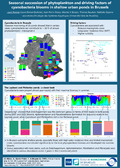
[en] Small, shallow urban lakes play a crucial role in urban areas, providing important ecosystem services, such as water quality regulation, biodiversity support, and recreational opportunities, which are closely linked to the biomass and composition of phytoplankton communities. In several Brussels ponds, cyanobacteria blooms are recurrently observed, raising concerns due to their negative effects, including increasing turbidity, decreasing diversity and possible toxin production. To gain insights into the dynamics of phytoplankton succession and the drivers of cyanobacteria occurrence in urban water ecosystems, this study investigates the seasonal succession of phytoplankton groups (cyanobacteria, chlorophytes, cryptophytes, diatoms, chrysophytes, euglenophytes, and dinoflagellates) related to change of morphological and biogeochemical conditions. A chemotaxonomic analysis of phytoplankton communities in 20 ponds, conducted over four seasons within a year, revealed significant inter-pond variations in total phytoplankton biomass. Cryptophytes and chlorophytes dominated in most ponds, while a subset exhibited elevated cyanobacteria biomass, particularly during summer. High cyanobacteria biomass was associated with reduced macrophyte cover, long water residence times, and high turbidity. The two-year (bi)monthly analysis of four selected ponds provided a more detailed view of temporal variations in phytoplankton dynamics and amplitude of cyanobacteria blooms. When present, cyanobacteria blooms are dominated by genera Dolichospermum, Microcystis, and Aphanizomenon, identified via 16S rRNA sequencing with cyanobacteria-specific primers.