A step into the future: Performance evaluation of Uniqo® 160 (EuroImmun®), a fully automated for the diagnosis and monitoring of autoimmune diseases - 2025
[en] OBJECTIVES
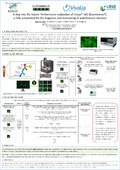
The aim of this study was to evaluate the semi-quantitative or qualitative in vitro detection of human immunoglobulin autoantibodies by IIF on UNIQO®160 (EuroImmun®) for the diagnosis and monitoring of autoimmune diseases.
MATERIAL AND METHODS
UNIQO®160 detects antibodies targeting cell nuclei (ANA) on Hep-20-10 cell substrates (HS), granulocyte cytoplasm (ANCA) on granulocyte substrates (GS), and tissue components on tissue substrates (TS). Specific antibodies bind to patient's antigens contained in sera and are detected using anti-human antibodies conjugated with fluorescein isothiocyanate by fluorescence microscopy, evaluated on a computer screen on EUROLabOffice® 4.0 software. Precision was evaluated using sera from positive patients tested three times daily over five days across the three types of substrates. For method comparison, 62 (HS), 26 (GS) and 34 (TS) patient sera were compared with manual microscopy (reference method). Results were correlated with immunodot analyses performed on the EUROBlotOne® and IgG antibody proteinase 3 (PR3) and myeloperoxidase (MPO) measurements in human serum, conducted by immunoenzymatic assay on the Chorus® platform. Accuracy was assesed through external quality control (EQC) analysis from Rerenzinstitut für Bioanalytik (RfB).
RESULTS
Intra- and inter-run results were identical in fluorescence images and antibody titers for all substrate types evaluated. Analytical concordance was achieved between the evaluated substrates on UNIQO®160 and the reference method. Few samples showed discrepancies, but correlation with immunodot results, IgG assays for PR3 and MPO, and clinical records largely supported the findings of the UNIQO®160. Antibody titers measured using the UNIQO®160 was slightly higher compared to manual microscopy, but clinically acceptable. EQC results demonstrated analytical concordance with methods results.
CONCLUSION
UNIQO®160 demonstrates reliable performance, yielding results comparable to those obtained through manual microscopy, with any differences observed lacking clinical significance and meeting the operational requirements of the laboratory.
Disciplines :
Laboratory medicine & medical technology
Author, co-author :
Parulski, Chloé ; Centre Hospitalier Universitaire de Liège - CHU > > Pool assistant - biologie clinique ; Université de Liège - ULiège > Faculté de Médecine > Master spéc. biol. clin. (sc. pharma.) ; Centre Hospitalier de l'Ardenne, Vivalia Libramont > Biologie Clinique
Antoine, Mathilde; Centre Hospitalier de l'Ardenne, Vivalia Libramont > Biologie Clinique
Lutz, Carine; Centre Hospitalier de l'Ardenne, Vivalia Libramont > Biologie Clinique
Bastin, Pierre; Centre Hospitalier de l'Ardenne, Vivalia Libramont > Biologie Clinique
Hougardy, Nicolas; Cliniques du Sud du Luxembourg, Vivalia Arlon > Biologie Clinique
Language :
English
Title :
A step into the future: Performance evaluation of Uniqo® 160 (EuroImmun®), a fully automated for the diagnosis and monitoring of autoimmune diseases