Disorders of Consciousness; ABCD classification; Mesocircuit; EEG; PET
Abstract :
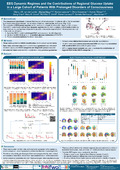
[en] INTRODUCTION: Consciousness is thought to be supported by the brain through interactions between the thalamus, basal ganglia, and cortex. Within the mesocircuit hypothesis, the EEG power spectrum’s shape, visually classified in “A”, “B”, “C”, and “D”-type patterns, is thought to reflect the extent of thalamocortical deafferentation in patients with Disorders of Consciousness (DoC) after severe brain injury, ranging from most to least impaired. This ABCD model has shown diagnostic value in the acute (<28 days) stages of DoC.
METHODS: Here, the ABCD classification is validated in a large sample (140 prolonged DoC, 29 controls), and associated to the cerebral glucose metabolism FDG-PET through a region-based analysis (RBA) in a subsample (n=108). Three raters performed the ABCD rating twice, at least a month apart, blinded to behavioural diagnosis, previous ratings and each other’s ratings. Consensus was reached in a separate session.
RESULTS: There was substantial inter-rater (κ=0.64) and intra-rater (κ=0.70) agreement. Increased consciousness was associated with more favourable patterns (χ2(16, n=169)=85.22, p<.001). RBA including controls highlighted that the glucose metabolism associated with “D”-type patterns was significantly higher across the brain compared to all other patterns. Without controls, differential glucose metabolism was observed between “A” and “B”-types, and more locally between “C” and “D”-types.
CONCLUSION: These results support the notion that simple, visual EEG spectral power inspection in prolonged DoC can be clinically informative. The RBA will promote development of objective guidelines for pattern identification to enhance rater reliability, support clinical translation, and pinpoint critical brain regions necessary for sustaining thalamocortical electrogenesis.