Psychology Inertia; Memory Strategies; Visual Working Memory Capacity; Transcranial Alternating Current Stimulation (tACS)
Abstract :
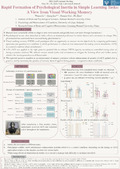
[en] Psychological inertia, commonly referred to as “habit”, denotes the irrational inclination towards initial choices and resistance to change. Previous studies have indicated that psychological inertia may manifest in complex learning tasks involving processes such as long-term memory, reasoning, and decision-making, often assessed through questionnaires. Despite humans' remarkable ability to adapt flexibly to new environments and rapidly learn new tasks through instructions, it remains uncertain whether psychological inertia could develop in simple learning tasks focusing on working memory. To address this gap, we employed two recall tasks presenting simple stimuli (i.e. color and orientation) to measure working memory performance. The aim was to investigate whether individuals' allocation patterns of memory capacity became fixed, forming psychological inertia, after brief practice. Additionally, 4 Hz transcranial alternating current stimulation (tACS) was applied to the right posterior parietal lobe to increase memory capacity, starting before or after practice. The experimental results revealed that participants exhibited different memory resource allocation patterns in subsequent tasks only when their memory capacity was enhanced before the practice phase. However, practicing before the increase in memory capacity did not lead to changes in memory resource allocation patterns. Consequently, we conclude that individuals could develop psychological inertia after only a few practice trials in simple learning tasks. However, this inertia does not seem to transfer from one task to another.
Disciplines :
Neurosciences & behavior
Author, co-author :
Li, Wenrui ; Université de Liège - ULiège > Psychologie et Neuroscience Cognitives (PsyNCog) ; Institute of Brain and Psychological Sciences > Sichuan Normal University
Liu, Qiang; Institute of Brain and Psychological Sciences > Sichuan Normal University ; Research Center of Brain and Cognitive Neuroscience > Liaoning Normal University
Guo, Ruiqiao; Institute of Brain and Psychological Sciences > Sichuan Normal University
Zhao, Na; Research Center of Brain and Cognitive Neuroscience > Liaoning Normal University
Language :
English
Title :
Rapid Formation of Psychological Inertia in Simple Learning Tasks: A View from Visual Working Memory
Publication date :
31 May 2024
Event name :
2024 Annual Meeting of the Belgian Association for Psychological Sciences