Abstract :
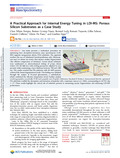
[en] This study presents a methodical procedure for optimizing laser desorption/ionization mass spectrometry (LDI-MS) supports using porous silicon (PSi) substrates. The approach involves the use of substituted benzyl-pyridinium salts (thermometer ions) to obtain one metric that assesses analyte fragmentation (the effective temperature of vibration). Porous silicon substrates were synthesized via electrochemical etching of p-type silicon wafers (10-20 mΩ·cm), with etching parameters adjusted to vary porosity while maintaining a layer thickness between 700 and 1200 nm. The results revealed that PSi substrates with 40-60% porosity achieved the lowest fragmentation levels. This finding was validated through the analysis of N-acetyl glucosamine, a carbohydrate, which confirmed the effective temperature trend. Further analysis involving peptides, specifically P14R and a peptide mix (Peptide Calibration Standard II, Bruker), demonstrated that the optimized PSi substrates enabled the desorption and ionization of peptides with a maximum mass at m/z 2465, corresponding to ACTH clip 1-17. These results highlight the critical role of substrate porosity in minimizing analyte fragmentation and enhancing LDI-MS performance.
Funders :
ULille - Université de Lille
SPW - Service Public de Wallonie
ERDF - European Regional Development Fund
CNRS - Centre National de la Recherche Scientifique
Waalse Gewest
IEMN - Institut d’Electronique, Microélectronique et Nanotechnologie
Funding text :
This project was funded by Wallonie Recherche (SPW) in the framework of the Win4Doc program (CANARI project, Convention no. 2110248) and Incize srl. The authors would like to acknowledge the support of the Centre National de la Recherche Scientifique (CNRS), the Universite\u0301 de Lille and of the Centrale de Micro Nano Fabrication (CMNF) at the Institut d\u2019electronique, Microe\u0301lectronique et Nanotechnologie (IEMN). Acknowledgements are also due to the Wallonia Infrastructure Nano Fabrication (WINFAB) and the Wallonia ELectronics & COmmunications Measurements (WELCOME) at the Universite\u0301 catholique de Louvain. The authors would also like to acknowledge Dr. Christopher Kune for his aid with the DFT computations. This work was also partly supported by the French RENATECH network. Computational resources have been provided by the Consortium des E\u0301quipements de Calcul Intensif (CE\u0301CI), funded by the Fonds de la Recherche Scientifique de Belgique (F.R.S.-FNRS) under Grant No. 2.5020.11 and by the Walloon Region. This work was also supported by the Walloon Region and the Fond Europe\u0301en de De\u0301veloppement Re\u0301gional (FEDER) [BIOMED HUB Technology Support 2.2.1/996; portefeuille 246099-510388].
Scopus citations®
without self-citations
1