[en] Objective:
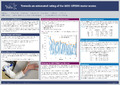
This study aimed at developing an automated rating method for the MDS-UPDRS motor scores in Parkinson’s disease (PD) patients. This automated rating uses inertial measurement units (IMUs) to assist in the motor examination of the MDS-UPDRS.
Background:
In PD, the gold standard to evaluate the severity of the motor and non-motor symptoms is the MDS-UPDRS. However, the precision of the PD motor signs evaluation remains constrained by subjectivity and inter-examiner variability. A more objective assessment method may decrease or even eliminate these limitations.
Methods
PD Study:
Tools4Patient has developed an IMU-based device where sensors are placed on the tip of the index finger and thumb bilaterally. The device was used in a PD study to record movements during 4 motor tasks of the MDS-UPDRS Part III: finger tapping (FT), pronation/supination of hands (PSH), postural tremor of the hands (PTH) and kinetic tremor of the hands (KTH). This pilot study including 14 PD subjects was single-site, non-randomized, observational with no treatment intervention.
Modeling:
Features quantifying the movement were extracted for each task using IMU-recordings. From these features, a machine-learning model estimated the MDS-UPDRS motor scores of patients. The performance of this automated scoring method was evaluated with the concordance index (C-index) measuring the concordance with the scores given by one MDS-UPDRS certified examiner.
Results:
The performances of the automated scoring method were significant for the four targeted tasks: FT, PSH, PTH, and KTH. The C-Indices were 0.803, 0.772, 0.892 and 0.798, respectively, with all the p-values below 0.001.
To put these results into perspective, we estimated the concordance between several MDS-UPDRS certified examiners evaluating the same motor tasks using video recordings of patients. Their concordance was similar or lower to the concordance of the automated rating method.
Conclusions:
Tools4Patient has developed an IMU-based device combined with machine-learning models to automatically, accurately, and objectively measure the MDS-UPDRS hand motor scores (FT, PSH, PTH and KTH tasks) when compared with more subjective examiner assessments. This automated rating may help assess motor tasks in PD patients with greater accuracy. This method might eventually be improved to provide motor scores on a continuous scale
Disciplines :
Neurology Mechanical engineering
Author, co-author :
Marchal, S; Cognivia, Mont Saint Guibert, Belgium
Garraux, Gaëtan ; Université de Liège - ULiège > GIGA > GIGA Neurosciences - MoVeRe ; Centre Hospitalier Universitaire de Liège - CHU > > Service de neurologie
Branders, S; Cognivia, Mont Saint Guibert, Belgium
Bernard, Guillaume; Cognivia, Mont Saint Guibert, Belgium
Billocq, Céline; Cognivia, Mont Saint Guibert, Belgium
Pereira, Alvaro; Cognivia, Mont Saint Guibert, Belgium
Language :
English
Title :
Towards an automated rating of the MDS-UPDRS motor scores
Publication date :
2021
Event name :
MDS Virtual Congress 2021
Event organizer :
Movement Disorders Society
Event date :
September 17-22
Audience :
International
Journal title :
Movement Disorders
ISSN :
0885-3185
eISSN :
1531-8257
Publisher :
John Wiley & Sons, Hoboken, United States - New York