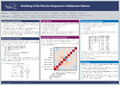
[en] Objective: The objective of this study was to investigate the predictability of the placebo response in Parkinson’s disease (PD) subjects participating in a randomized clinical trial (RCT).
Background: The magnitude and the variability of the placebo response have a confounding influence when testing the superiority of active compounds compared to placebo. Identifying covariates associated with this PD placebo response may help mitigate its effect, increase the study power, and result in a more optimal RCT design in future studies.
Method: Study:
One hundred and four PD subjects were enrolled and received placebo (oral, TID) treatment for three months in a blinded administration. Ninety-four patients completed the study. The placebo response was measured as the change from baseline of the MDS-UPDRS part I, II, III, and IV, IGAC, PGAC, PDQ-39, ESS, and FSS. In addition, the Multidimensional Psychological Questionnaire (MPsQ), a questionnaire designed to assess various psychological traits was administered at baseline.
Modeling:
Linear regressions were fitted to model the placebo response as measured by each endpoint. These models used the baseline values of the endpoints, subjects’ standard demographics, and the results of the MPsQ as covariates. An F-test was used to determine the statistical significance of each model.
Results: After three months of daily administration of placebo, the placebo response was small with an average decrease of 1.12 in the MDS-UPDRS part III score. Variability was also observed in the placebo response with only a few significant correlations between the endpoints.
Nevertheless, the models were able to explain between 11.2% and 44.4% of the placebo response variance (adjusted R-squared). These models were statistically significant for eight of the ten endpoints, including the MDS-UPDRS part II, III, and IV. The best performances were observed for the IGAC and PGAC with 44.4% and 43.4%, respectively.
Conclusion: These results demonstrated that it is possible to identify covariates associated with the placebo response in Parkinson’s disease RCTs. These covariates are related to the baseline intensity of the PD and the patient’s psychological traits.
This study is a significant step towards the prediction of the placebo response in Parkinson’s disease RCTs. Such prediction could be used in PD RTCs to improve study designs and decrease the negative impact of the placebo response variability leading to greater study power;