Emotion; Belief in occurrence; Nonbelieved memories; Autobiographical memory
Abstract :
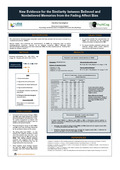
[en] The phenomenon whereby people remember events that they know never happened is called "nonbelieved memory" (NBM). It reflects a dissociation in autobiographical memory between two distinct components: recollection and autobiographical belief (or belief in occurrence). Several studies have investigated the characteristics of NBMs by comparing them with typical (i.e. believed) memories (BMs). Although some phenomenological differences have been observed, NBMs are often experienced as "memory-like" despite the change in belief. The first aim of this study was to examine whether the characteristics of NBMs are influenced by the emotional valence of the events, as has already been shown for typical memories. A second aim was to examine whether emotional valence and intensity ratings follow similar patterns over time for both types of memory. To this end, 220 participants aged between 20 and 60 were asked to describe a personal NBM, explain the reason for their change in belief, and rate its phenomenological characteristics (e.g., sensory and contextual details). When an NBM was retrieved, participants also described an age-matched BM of the same valence, so that the characteristics of both types of memory could be directly compared. Consistent with previous findings, NBMs and BMs were rated similarly on certain phenomenological characteristics, such as the spatial arrangement of objects and people within the memory. Differences emerged for other features, particularly auditory and temporal details, which were reported more vividly for BMs than for NBMs. We found that phenomenological ratings of both NBMs and BMs were only minimally influenced by emotional valence. However, an analysis of emotional valence and intensity ratings at the time of the event and during retrieval revealed that the fading affect bias (FAB), whereby negative emotions fade faster over time than positive ones, was evident for both NBMs and BMs. As the FAB is well established for typical memories, these findings demonstrate the robustness of this bias, showing that it holds even for events that individuals no longer consider part of their personal past. Our results thus support the idea that NBMs and BMs resemble each other despite differences in belief.
Research Center/Unit :
PsyNCog - Psychologie et Neuroscience Cognitives - ULiège