Abstract :
[en] As is regularly pointed out around the world, too many people on Earth do not adopt a sufficiently active lifestyle. However, during their compulsory schooling, as part of their physical education (PE) courses, future adults should be acquiring the knowledge and skills that will enable them to comply with international recommendations in this area. Some publications tend to minimize the impact of the learning that secondary school students are supposed to be doing through PE, and little data seems to be available on their mastery of this type of concepts. However, knowing the foundations is considered as the starting point for any process of changing or maintaining a behavior. The aim of this study is to determine whether young people entering higher education are familiar with basic concepts related to a physically active lifestyle, particularly in terms of their definitions.
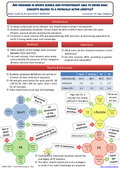
A total of 1,409 students from the University of Liège starting studies in sports science or physiotherapy were surveyed between 2013-2014 and 2023-2024. Among other things, they were asked to define four concepts (sport, lifestyle, physical activity and PE). This paper focuses on (1) verifying the students' ability to propose a definition of the concepts; (2) identifying the content of the definitions, and; (3) comparing the responses according to different independent variables (gender, section, nationality). For each concept, based on the literature, we identified four categories of items and determined the extent to which they were present in the students’ definitions.
Between 88.5% (lifestyle) and 94.4% (sport) of the students who responded provided a concrete definition. The rates were higher for physiotherapy’ students and for girls. However, when we look at the presence of the expected items, it appears that the vast majority of definitions were incomplete. Only 3.2% of students mentioned all four expected items in their definition of sport, 2.4% for lifestyle, 1.6% for PE and 1.2% for physical activity. Out of a maximum of 4 items, the averages are 1.9, 2.2, 1.7 and 1 respectively. The distribution of the various items will be detailed during the presentation. The differences mentioned above between the students of both programs and gender are reflected in the precision of the definitions, while among sports science students, the comparison between the 2013-2014 and 2023-2024 cohorts is in favor of the last one. French students proposed more items than Belgian ones in their definitions of sport.
The findings highlight that students who beginning studies where concepts related to an active lifestyle are central do not necessarily master them. The difficulty of precisely defining physical activity has already been identified by health professionals. There is cause for concern about the level of knowledge in the general population. PE teachers should be encouraged to focus more on basic knowledge related to the promotion of a physically active lifestyle.