Active-DTS; A-DTS; groundwater flow direction; groundwater flux; mass flux of contaminants
Abstract :
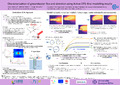
[en] When placed in a groundwater flow, a heated fiber optic (FO) cable will undergo a thermal elevation inversely proportional to the flux. This temperature elevation is measured all along the FO cable by mean of Active-DTS method that has been validated in porous media, when the FO cable is in direct contact with the material. In consolidated media however, the interpretation of the data is difficult because of the presence of the borehole: when the FO cable is placed inside the borehole vertical fluxes are created by convection and when the FO cable is placed outside the borehole its position is unknown inside the flow distortion field induced by the presence of the well. In this latter case, the use of multiple FO cables installed vertically along the PVC tube of the borehole, in the gravel filter, allows tracking the heat plume generated by one heated FO cable with the other non-heated ones. This will help understand the behavior of the flow: direction and flow distortion field to finally better estimate the actual flux in the aquifer. Moreover, heating these FO cables individually and successively and analyzing their respective temperature elevation makes it possible to reduce the uncertainty on the flux estimate and get a first idea of the general flow direction. The configuration presented shows that out of 4 FO cables installed 2 will always be positioned in the flow with an angle between 0° (green curve) and 45° (gold curve) and their thermal response is the closest to the actual flux of the aquifer (blue curve). In addition, the diagonal passing by these 2 positions can be used to determine the general direction of the flow: the actual flow direction would be between this diagonal direction +-45°C.
Research Center/Unit :
UEE - Urban and Environmental Engineering - ULiège
Disciplines :
Geological, petroleum & mining engineering
Author, co-author :
Varisano, Luca ; Université de Liège - ULiège > Urban and Environmental Engineering
Simon, Nataline ; Université de Liège - ULiège > Urban and Environmental Engineering
Brouyère, Serge ; Université de Liège - ULiège > Urban and Environmental Engineering
Language :
English
Title :
Characterization of groundwater flux and direction using Active-DTS: first modelling results
Alternative titles :
[fr] Caractérisation du flux et de la direction de l'écoulement d'eau souterrainne en utilisant l'Active-DTS : premiers résultats de modélisation numérique
Original title :
[en] Characterization of groundwater flux and direction using Active-DTS: first modelling results
Publication date :
28 April 2025
Number of pages :
1
Event name :
EGU 2025
Event organizer :
European Geosciences Union
Event place :
Vienne, Austria
Event date :
27/04/25 - 2/05/25
Audience :
International
Funders :
EU - European Union SPW - Service Public de Wallonie
Funding number :
Feder 2021-2027
Funding text :
Cofinancé par l’UNION EUROPÉENNE et par la Wallonie