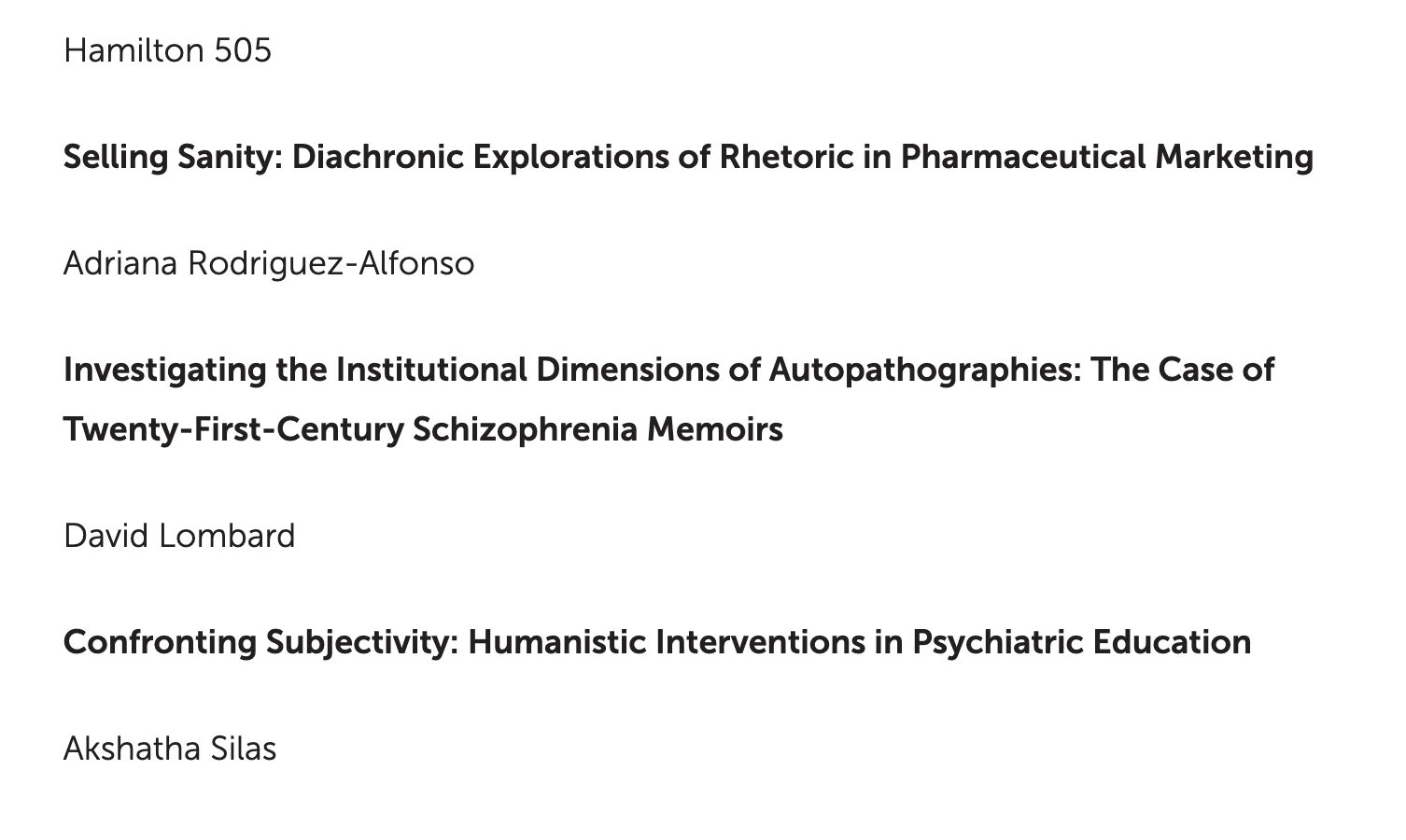
[en] Autopathographies, namely autobiographies about illness or disability (Couser 1997, 5), have multiple institutional dimensions. They often result from “coaxing” (Smith and Watson 2010, 64) by institutions (e.g., publishers, editors, and literary agents) and people in general. In twenty-first-century contexts marked by memoir booms and self-help culture, autopathographies also belong to a commercialized therapeutic discourse that tends to foreground models of self defined by suffering and victimhood (Rak 2013, 213; Van Goidsenhoven and Masschelein 2018, 173–74). For these reasons, the medico-cultural knowledge that autopathographies offer requires critical scrutiny (Radden and Varga 2013, 100). Still, autopathographies have contributed to shaping the bio-psycho-socio-existential and interculturally sensitive model of illness for which the health humanities call (Frank 2013, 1–3). With this in mind, this paper will investigate the institutional dimensions of autopathography by focusing on the case of schizophrenia. Schizophrenia memoirs have played a crucial role in shaping the development of diagnosis, treatment, and cultural understanding of schizophrenia, which is still subject to misconception and stigma (Granger and Naudin 2022). Inspired by literary-cultural studies (Van Goidsenhoven and Masschelein 2018) and rhetorical narratology (Phelan 2017; 2022), this paper will analyze the narrative features and paratexts of memoirs such as Elyn Saks’ The Center Cannot Hold (2007) and Esmé Wang’s The Collected Schizophrenias (2019) and qualitative data from book reviews and interviews to determine the rhetorical aims of these narratives. In doing so, it will assess how schizophrenia memoirs and autopathographies more generally can challenge or enrich contemporary medico-cultural knowledge about illnesses and institutions.
Research Center/Unit :
The Leuven Center for Health Humanities Leuven English Literature Research Group Leuven Literary and Cultural Studies Research Unit Leuven Cultural Studies Research Group
Disciplines :
Literature Arts & humanities: Multidisciplinary, general & others
Author, co-author :
Lombard, David ; Université de Liège - ULiège > Département de langues modernes : linguistique, littérature et traduction > Littérature anglaise moderne et littérature américaine
Language :
English
Title :
Investigating the Institutional Dimensions of Autopathographies: The Case of Twenty-First-Century Schizophrenia Memoirs
Publication date :
04 April 2025
Event name :
Health Humanities Consortium Conference 2025 - “Healing Institutions”
Event organizer :
Thomas Jefferson University Health Humanities Consortium