Bisphenol A; Endocrine-disrupting chemicals; Photoperiod; Reproduction; Seasonality; Phodopus/physiology; Energy metabolism; Kisspeptin; Body Weight; Pollution; Public Health, Environmental and Occupational Health
Abstract :
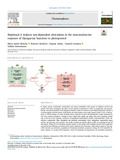
[en] In nature, species synchronize reproduction and energy metabolism with seasons to optimize survival and growth. This study investigates the effect of oral exposure to bisphenol A (BPA) on phenotypic and neuroendocrine seasonal adaptations in the Djungarian hamster, which in contrast to conventional laboratory rodents, is a well-recognized seasonal model. Adult female and male hamsters were orally exposed to BPA (5, 50, or 500 μg/kg/d) or vehicle during a 10-week transition from a long (LP) to short (SP) photoperiod (winter transition) or vice versa (summer transition). Changes in body weight, food intake, and pelage color were monitored weekly and, at the end of the exposure, expression of hypophysio-hypothalamic markers of photoperiodic (TSHβ, deiodinases), reproductive (Rfrp, kisspeptin) and metabolic (somatostatin, Pomc) integration, reproductive organ activity, and glycemia were assessed. Our results revealed sex-specific effects of BPA on acquiring SP and LP phenotypes. During LP to SP transition, females exposed to 500 μg/kg/d BPA exhibited delayed body weight loss and reduced feed efficiency associated with a lower expression of somatostatin, while males exposed to 5 μg/kg/d BPA showed an accelerated acquisition of SP-induced metabolic parameters. During SP to LP transition, females exposed to 5 μg/kg/d BPA displayed a faster LP adaptation in reproductive and metabolic parameters, along with kisspeptin downregulation occurring 5 weeks earlier and Pomc upregulation delayed for up to 10 weeks. In males, BPA exposure led to decreased expression of central photoperiodic integrators, with no effect on the acquisition of the LP phenotype. This pioneering study investigating EDCs' effects on mammalian seasonal physiology shows that BPA alters the dynamics of metabolic adaptation to both SP and LP transitions with marked sex dimorphism, causing temporal discordance in seasonal adaptation between males and females. These findings emphasize the importance of investigating EDCs' effects on non-conventional animal models, providing insights into wildlife physiology.
Disciplines :
Life sciences: Multidisciplinary, general & others
Author, co-author :
Moralia, Marie-Azélie ; Université de Liège - ULiège > Département des sciences cliniques > Pédiatrie ; Centre National de La Recherche Scientifique, Université de Strasbourg, Institut des Neurosciences Cellulaires et Intégratives, 8 Allée Du Général Rouvillois, 67000, Strasbourg, France
Bothorel, Béatrice; Centre National de La Recherche Scientifique, Université de Strasbourg, Institut des Neurosciences Cellulaires et Intégratives, 8 Allée Du Général Rouvillois, 67000, Strasbourg, France
Andry, Virginie; Centre National de La Recherche Scientifique, Université de Strasbourg, Institut des Neurosciences Cellulaires et Intégratives, 8 Allée Du Général Rouvillois, 67000, Strasbourg, France
Goumon, Yannick ; Centre National de La Recherche Scientifique, Université de Strasbourg, Institut des Neurosciences Cellulaires et Intégratives, 8 Allée Du Général Rouvillois, 67000, Strasbourg, France
Simonneaux, Valérie; Centre National de La Recherche Scientifique, Université de Strasbourg, Institut des Neurosciences Cellulaires et Intégratives, 8 Allée Du Général Rouvillois, 67000, Strasbourg, France. Electronic address: simonneaux@inci-cnrs.unistra.fr
Language :
English
Title :
Bisphenol A induces sex-dependent alterations in the neuroendocrine response of Djungarian hamsters to photoperiod.
This work was supported by the French agency for food, environmental and occupational health and safety (ANSES), the French Society for Endocrinology (SFE), and the Interdisciplinary Thematic Institute NeuroStra (ANR-10-IDEX-0002). We thank Dominique Ciocca, Sophie Reibel-Foisset, Nicolas Lethenet, and all the staff of the Chronobiotron animal facility of Strasbourg for taking care of the hamsters, as well as Paul Klosen for his guidance on the neuroanatomical analyses, and Sakina Mhaouty-Kodja for sharing her expertise on EDC research.This work was supported by the French agency for food, environmental and occupational health and safety (ANSES), the French Society for Endocrinology (SFE), and the Interdisciplinary Thematic Institute NeuroStra (ANR-10-IDEX-0002). We thank Dominique Ciocca, Sophie Reibel-Foisset, Nicolas Lethenet, and all the staff of the Chronobiotron\u2019s animal facility of Strasbourg for taking care of the hamsters, as well as Paul Klosen for his guidance on the neuroanatomical analyses.
Alonso-Magdalena, P., Morimoto, S., Ripoll, C., Fuentes, E., Nadal, A., The estrogenic effect of bisphenol A disrupts pancreatic β-cell function in vivo and induces insulin resistance. Environmental health perspectives 114:1 (2006), 106–112.
Alonso-Magdalena, P., Vieira, E., Soriano, S., Menes, L., Burks, D., Quesada, I., Nadal, A., Bisphenol A exposure during pregnancy disrupts glucose homeostasis in mothers and adult male offspring. Environmental health perspectives 118:9 (2010), 1243–1250.
Angle, B.M., Do, R.P., Ponzi, D., Stahlhut, R.W., Drury, B.E., Nagel, S.C., Taylor, J.A., Metabolic disruption in male mice due to fetal exposure to low but not high doses of bisphenol A (BPA): evidence for effects on body weight, food intake, adipocytes, leptin, adiponectin, insulin and glucose regulation. Reprod. Toxicol. 42 (2013), 256–268, 10.1016/j.reprotox.2013.07.017.
Bankhead, P., Loughrey, M.B., Fernández, J.A., Dombrowski, Y., McArt, D.G., Dunne, P.D., Coleman, H.G., QuPath: open source software for digital pathology image analysis. Sci. Rep. 7:1 (2017), 1–7.
Bao, R., Onishi, K.G., Tolla, E., Ebling, F.J., Lewis, J.E., Anderson, R.L., Stevenson, T.J., Genome sequencing and transcriptome analyses of the Siberian hamster hypothalamus identify mechanisms for seasonal energy balance. Proc. Natl. Acad. Sci. USA 116:26 (2019), 13116–13121.
Bernard, D.J., Losee-Olson, S., Turek, F.W., Age-related changes in the photoperiodic response of Siberian hamsters. Biol. Reprod. 57:1 (1997), 172–177.
Bockmann, J., Böckers, T.M., Vennemann, B., Niklowitz, P., Müller, J., Wittkowski, W., Kreutz, M.R., Short photoperiod-dependent down-regulation of thyrotropin-alpha and -beta in hamster pars tuberalis-specific cells is prevented by pinealectomy. Endocrinology 137:5 (1996), 1804–1813, 10.1210/endo.137.5.8612518.
Buchanan, K.L., Yellon, S.M., Delayed puberty in the male Djungarian hamster: effect of short photoperiod or melatonin treatment on the GnRH neuronal system. Neuroendocrinology 54:2 (1991), 96–102.
Butler, M.P., Turner, K.W., Park, J.H., Butler, J.P., Trumbull, J.J., Dunn, S.P., Zucker, I., Simulated natural day lengths synchronize seasonal rhythms of asynchronously born male Siberian hamsters. Am. J. Physiol. Regul. Integr. Comp. Physiol. 293:1 (2007), R402–R412, 10.1152/ajpregu.00146.2007.
Cao, J., Mickens, J.A., McCaffrey, K.A., Leyrer, S.M., Patisaul, H.B., Neonatal Bisphenol A exposure alters sexually dimorphic gene expression in the postnatal rat hypothalamus. Neurotoxicology 33:1 (2012), 23–36, 10.1016/j.neuro.2011.11.002.
Cázarez‐Márquez, F., Milesi, S., Laran‐Chich, M.P., Klosen, P., Kalsbeek, A., Simonneaux, V., Kisspeptin and RFRP 3 modulate body mass in Phodopus sungorus via two different neuroendocrine pathways. J. Neuroendocrinol., 31(4), 2019, e12710.
Chun, T.Y., Gorski, J., High concentrations of bisphenol A induce cell growth and prolactin secretion in an estrogen-responsive pituitary tumor cell line. Toxicol. Appl. Pharmacol. 162:3 (2000), 161–165.
Corbitt, C., Satre, D., Adamson, L.A., Cobbs, G.A., Bentley, G.E., Dietary phytoestrogens and photoperiodic response in a male songbird, the Dark-eyed Junco (Junco hyemalis). Gen. Comp. Endocrinol. 154:1–3 (2007), 16–21, 10.1016/j.ygcen.2007.06.026.
da Silva, M.M., Gonçalves, C.F.L., Miranda-Alves, L., Fortunato, R.S., Carvalho, D.P., Ferreira, A.C.F., Inhibition of type 1 iodothyronine deiodinase by bisphenol A. Horm. Metab. Res. 51:10 (2019), 671–677.
Dardente, H., Menet, J.S., Poirel, V.J., Streicher, D., Gauer, F., Vivien-Roels, B., Masson-Pévet, M., Melatonin induces Cry1 expression in the pars tuberalis of the rat. Brain Res Mol Brain Res 114:2 (2003), 101–106, 10.1016/s0169-328x(03)00134-7.
Dardente, H., Simonneaux, V., GnRH and the photoperiodic control of seasonal reproduction: delegating the task to kisspeptin and RFRP‐3. J. Neuroendocrinol., 34(5), 2022, e13124.
Delfosse, V., Grimaldi, M., Pons, J.L., Boulahtouf, A., le Maire, A., Cavailles, V., Balaguer, P., Structural and mechanistic insights into bisphenols action provide guidelines for risk assessment and discovery of bisphenol A substitutes. Proc Natl Acad Sci U S A 109:37 (2012), 14930–14935, 10.1073/pnas.1203574109.
Desai, M., Ferrini, M.G., Han, G., Jellyman, J.K., Ross, M.G., In vivo maternal and in vitro BPA exposure effects on hypothalamic neurogenesis and appetite regulators. Environ. Res. 164 (2018), 45–52.
Dolinoy, D.C., Huang, D., Jirtle, R.L., Maternal nutrient supplementation counteracts bisphenol A-induced DNA hypomethylation in early development. Proc Natl Acad Sci U S A 104:32 (2007), 13056–13061, 10.1073/pnas.0703739104.
Dumbell, R.A., Scherbarth, F., Diedrich, V., Schmid, H.A., Steinlechner, S., Barrett, P., Somatostatin agonist pasireotide promotes a physiological state resembling short‐day acclimation in the photoperiodic male Siberian hamster (Phodopus sungorus). J. Neuroendocrinol. 27:7 (2015), 588–599.
Duncan, M.J., Goldman, B.D., Hormonal regulation of the annual pelage color cycle in the Djungarian hamster, Phodopus sungorus. I. Role of the gonads and pituitary. J. Exp. Zool. 230:1 (1984), 89–95, 10.1002/jez.1402300112.
Duncan, M.J., Goldman, B.D., Di Pinto, M.N., Stetson, M.H., Testicular function and pelage color have different critical daylengths in the Djungarian hamster, Phodopus sungorus sungorus. Endocrinology 116:1 (1985), 424–430, 10.1210/endo-116-1-424.
Eskes, G.A., Gonadal responses to food restriction in intact and pinealectomized male golden hamsters. Reproduction 68:1 (1983), 85–90.
Facciolo, R.M., Madeo, M., Alò, R., Canonaco, M., Dessì-Fulgheri, F., Neurobiological effects of bisphenol A may be mediated by somatostatin subtype 3 receptors in some regions of the developing rat brain. Toxicol. Sci. 88:2 (2005), 477–484, 10.1093/toxsci/kfi322.
Fernandez, M.O., Bourguignon, N.S., Arocena, P., Rosa, M., Libertun, C., Lux-Lantos, V., Neonatal exposure to bisphenol A alters the hypothalamic-pituitary-thyroid axis in female rats. Toxicology letters 285 (2018), 81–86.
Figala, J., Hoffmann, K., Goldau, G., [The annual cycle in the djungarian hamster phodopus sungorus pallas]. Oecologia 12:2 (1973), 89–118, 10.1007/bf00345511.
Furuta, I., Porkka-Heiskanen, T., Scarbrough, K., Tapanainen, J., Turek, F.W., Hsueh, A.J., Photoperiod regulates testis cell apoptosis in Djungarian hamsters. Biol. Reprod. 51:6 (1994), 1315–1321.
García-Arevalo, M., Alonso-Magdalena, P., Rebelo Dos Santos, J., Quesada, I., Carneiro, E.M., Nadal, A., Exposure to bisphenol-A during pregnancy partially mimics the effects of a high-fat diet altering glucose homeostasis and gene expression in adult male mice. PLoS One, 9(6), 2014, e100214.
Goldman, B.D., The Siberian hamster as a model for study of the mammalian photoperiodic mechanism. Melatonin After Four Decades: An Assessment of Its Potential, 1999, 155–164.
Gorman, M.R., Zucker, I., Environmental induction of photononresponsiveness in the Siberian hamster, Phodopus sungorus. Am. J. Physiol. 272:3 Pt 2 (1997), R887–R895, 10.1152/ajpregu.1997.272.3.R887.
Greives, T.J., Kriegsfeld, L.J., Demas, G.E., Exogenous kisspeptin does not alter photoperiod-induced gonadal regression in Siberian hamsters (Phodopus sungorus). Gen. Comp. Endocrinol. 156:3 (2008), 552–558.
Guadaño-Ferraz, A., Obregón, M.J., Germain, D.L.S., Bernal, J., The type 2 iodothyronine deiodinase is expressed primarily in glial cells in the neonatal rat brain. Proc. Natl. Acad. Sci. USA 94:19 (1997), 10391–10396.
Hanon, E., Routledge, K., Dardente, H., Masson‐Pévet, M., Morgan, P.J., Hazlerigg, D.G., Effect of photoperiod on the thyroid‐stimulating hormone neuroendocrine system in the European hamster (Cricetus cricetus). J. Neuroendocrinol. 22:1 (2010), 51–55.
Harley, K.G., Gunier, R.B., Kogut, K., Johnson, C., Bradman, A., Calafat, A.M., Eskenazi, B., Prenatal and early childhood bisphenol A concentrations and behavior in school-aged children. Environ. Res. 126 (2013), 43–50, 10.1016/j.envres.2013.06.004.
Hazlerigg, D., Simonneaux, V., Seasonal Regulation of Reproduction in Mammals, vol. 4, 2015, Knobil and Neill's physiology of reproduction.
Helfer, G., Ross, A., Morgan, P., Neuromedin U partly mimics thyroid‐stimulating hormone and triggers W nt/β‐Catenin signalling in the photoperiodic response of F 344 rats. J. Neuroendocrinol. 25:12 (2013), 1264–1272.
Henson, J.R., Carter, S.N., Freeman, D.A., Exogenous T3 elicits long day–like alterations in testis size and the RFamides kisspeptin and gonadotropin-inhibitory hormone in short-day Siberian hamsters. J. Biol. Rhythm. 28:3 (2013), 193–200.
Herwig, A., de Vries, E.M., Bolborea, M., Wilson, D., Mercer, J.G., Ebling, F.J., Barrett, P., Hypothalamic ventricular ependymal thyroid hormone deiodinases are an important element of circannual timing in the Siberian hamster (Phodopus sungorus). PLoS One, 8(4), 2013, e62003.
Herwig, A., Petri, I., Barrett, P., Hypothalamic gene expression rapidly changes in response to photoperiod in juvenile Siberian hamsters (Phodopus sungorus). J. Neuroendocrinol. 24:7 (2012), 991–998, 10.1111/j.1365-2826.2012.02324.x.
Hoffmann, K., The influence of photoperiod and melatonin on testis size, body weight, and pelage colour in the Djungarian hamster (Phodopus sungorus). J. Comp. Physiol. 85:3 (1973), 267–282, 10.1007/BF00694233.
Jasnow, A.M., Huhman, K.L., Bartness, T.J., Demas, G.E., Short-day increases in aggression are inversely related to circulating testosterone concentrations in male Siberian hamsters (Phodopus sungorus). Horm. Behav. 38:2 (2000), 102–110, 10.1006/hbeh.2000.1604.
Kaneko, M., Okada, R., Yamamoto, K., Nakamura, M., Mosconi, G., Polzonetti-Magni, A.M., Kikuyama, S., Bisphenol A acts differently from and independently of thyroid hormone in suppressing thyrotropin release from the bullfrog pituitary. Gen. Comp. Endocrinol. 155:3 (2008), 574–580.
Katoh, K., Matsuda, A., Ishigami, A., Yonekura, S., Ishiwata, H., Chen, C., Obara, Y., Suppressing effects of bisphenol A on the secretory function of ovine anterior pituitary cells. Cell Biol. Int. 28:6 (2004), 463–469, 10.1016/j.cellbi.2004.03.016.
Kitamura, S., Suzuki, T., Sanoh, S., Kohta, R., Jinno, N., Sugihara, K., Ohta, S., Comparative study of the endocrine-disrupting activity of bisphenol A and 19 related compounds. Toxicol. Sci. 84:2 (2005), 249–259, 10.1093/toxsci/kfi074.
Klosen, P., Bienvenu, C., Demarteau, O., Dardente, H., Guerrero, H., Pévet, P., Masson-Pévet, M., The mt1 melatonin receptor and RORbeta receptor are co-localized in specific TSH-immunoreactive cells in the pars tuberalis of the rat pituitary. J. Histochem. Cytochem. 50:12 (2002), 1647–1657, 10.1177/002215540205001209.
Klosen, P., Maessen, X., van den Bosch de Aguilar, P., PEG embedding for immunocytochemistry: application to the analysis of immunoreactivity loss during histological processing. J. Histochem. Cytochem. 41:3 (1993), 455–463, 10.1177/41.3.8429209.
Klosen, P., Sébert, M.E., Rasri, K., Laran‐Chich, M.P., Simonneaux, V., TSH restores a summer phenotype in photoinhibited mammals via the RF‐amides RFRP3 and kisspeptin. Faseb. J. 27:7 (2013), 2677–2686.
Kriegsfeld, L.J., Ranalli, N.J., Bober, M.A., Nelson, R.J., Photoperiod and temperature interact to affect the GnRH neuronal system of male prairie voles (Microtus ochrogaster). J. Biol. Rhythm. 15:4 (2000), 306–316.
Kuiper, G.G., Lemmen, J.G., Carlsson, B., Corton, J.C., Safe, S.H., van der Saag, P.T., Gustafsson, J.A., Interaction of estrogenic chemicals and phytoestrogens with estrogen receptor beta. Endocrinology 139:10 (1998), 4252–4263, 10.1210/endo.139.10.6216.
Kurian, J.R., Keen, K.L., Kenealy, B.P., Garcia, J.P., Hedman, C.J., Terasawa, E., Acute influences of bisphenol A exposure on hypothalamic release of gonadotropin-releasing hormone and kisspeptin in female rhesus monkeys. Endocrinology 156:7 (2015), 2563–2570, 10.1210/en.2014-1634.
La Merrill, M.A., Vandenberg, L.N., Smith, M.T., Goodson, W., Browne, P., Patisaul, H.B., et al. Consensus on the key characteristics of endocrine-disrupting chemicals as a basis for hazard identification. Nat. Rev. Endocrinol. 16:1 (2020), 45–57.
Lang, I.A., Galloway, T.S., Scarlett, A., Henley, W.E., Depledge, M., Wallace, R.B., Melzer, D., Association of urinary bisphenol A concentration with medical disorders and laboratory abnormalities in adults. JAMA 300:11 (2008), 1303–1310, 10.1001/jama.300.11.1303.
Larkin, J.E., Jones, J., Zucker, I., Temperature dependence of gonadal regression in Syrian hamsters exposed to short day lengths. Am. J. Physiol. Regul. Integr. Comp. Physiol. 282:3 (2002), R744–R752.
Lee, N.J., Herzog, H., Coordinated regulation of energy and glucose homeostasis by insulin and the NPY system. J. Neuroendocrinol., 33(4), 2021, e12925.
Lopez-Rodriguez, D., Franssen, D., Bakker, J., Lomniczi, A., Parent, A.S., Cellular and molecular features of EDC exposure: consequences for the GnRH network. Nat. Rev. Endocrinol. 17:2 (2021), 83–96, 10.1038/s41574-020-00436-3.
Losa-Ward, S.M., Todd, K.L., McCaffrey, K.A., Tsutsui, K., Patisaul, H.B., Disrupted organization of RFamide pathways in the hypothalamus is associated with advanced puberty in female rats neonatally exposed to bisphenol A. Biol. Reprod., 87(2), 2012, 28 1.
Mackay, H., Patterson, Z.R., Abizaid, A., Perinatal exposure to low-dose bisphenol-A disrupts the structural and functional development of the hypothalamic feeding circuitry. Endocrinology 158:4 (2017), 768–777, 10.1210/en.2016-1718.
Mackay, H., Patterson, Z.R., Khazall, R., Patel, S., Tsirlin, D., Abizaid, A., Organizational effects of perinatal exposure to bisphenol-A and diethylstilbestrol on arcuate nucleus circuitry controlling food intake and energy expenditure in male and female CD-1 mice. Endocrinology 154:4 (2013), 1465–1475, 10.1210/en.2012-2044.
Marmugi, A., Ducheix, S., Lasserre, F., Polizzi, A., Paris, A., Priymenko, N., Martin, P.G., Low doses of bisphenol A induce gene expression related to lipid synthesis and trigger triglyceride accumulation in adult mouse liver. Hepatology 55:2 (2012), 395–407.
Mercer, J.G., Moar, K.M., Logie, T.J., Findlay, P.A., Adam, C.L., Morgan, P.J., Seasonally inappropriate body weight induced by food restriction: effect on hypothalamic gene expression in male siberian hamsters. Endocrinology 142:10 (2001), 4173–4181, 10.1210/endo.142.10.8454.
Mikkelsen, J.D., Simonneaux, V., The neuroanatomy of the kisspeptin system in the mammalian brain. Peptides 30:1 (2009), 26–33, 10.1016/j.peptides.2008.09.004.
Milesi, S., Simonneaux, V., Klosen, P., Downregulation of Deiodinase 3 is the earliest event in photoperiodic and photorefractory activation of the gonadotropic axis in seasonal hamsters. Sci. Rep. 7:1 (2017), 1–10.
Moffatt-Blue, C.S., Sury, J.J., Young, K.A., Short photoperiod-induced ovarian regression is mediated by apoptosis in Siberian hamsters (Phodopus sungorus). Reproduction (Cambridge, England) 131:4 (2006), 771–782.
Moghaddam, H.S., Samarghandian, S., Farkhondeh, T., Effect of bisphenol A on blood glucose, lipid profile and oxidative stress indices in adult male mice. Toxicol. Mech. Methods 25:7 (2015), 507–513.
Monje, L., Varayoud, J., Muñoz-de-Toro, M., Luque, E.H., Ramos, J.G., Exposure of neonatal female rats to bisphenol A disrupts hypothalamic LHRH pre-mRNA processing and estrogen receptor alpha expression in nuclei controlling estrous cyclicity. Reprod. Toxicol. 30:4 (2010), 625–634, 10.1016/j.reprotox.2010.08.004.
Moralia, M.-A., Quignon, C., Simonneaux, M., Simonneaux, V., Environmental disruption of reproductive rhythms. Front. Neuroendocrinol., 66, 2022, 100990.
Moriyama, K., Tagami, T., Akamizu, T., Usui, T., Saijo, M., Kanamoto, N., Nakao, K., Thyroid hormone action is disrupted by bisphenol A as an antagonist. J. Clin. Endocrinol. Metab. 87:11 (2002), 5185–5190, 10.1210/jc.2002-020209.
Motulsky, H.J., Christopoulos, A., Fitting Models to Biological Data Using Linear and Nonlinear Regression: A Practical Guide to Curve Fitting. 2003, GraphPad Software Inc., San Diego.
Nakane, Y., Yoshimura, T., Photoperiodic regulation of reproduction in vertebrates. Annu Rev Anim Biosci 7 (2019), 173–194, 10.1146/annurev-animal-020518-115216.
Nelson, R.J., Dark, J., Zucker, I., Influence of photoperiod, nutrition and water availability on reproduction of male California voles (Microtus californicus). Reproduction 69:2 (1983), 473–477.
Norris, D.O., Jones, R.E., Hormones and Reproduction in Fishes, Amphibians, and Reptiles. 1987, Springer.
Patisaul, H.B., Todd, K.L., Mickens, J.A., Adewale, H.B., Impact of neonatal exposure to the ERalpha agonist PPT, bisphenol-A or phytoestrogens on hypothalamic kisspeptin fiber density in male and female rats. Neurotoxicology 30:3 (2009), 350–357, 10.1016/j.neuro.2009.02.010.
Petri, I., Dumbell, R., Scherbarth, F., Steinlechner, S., Barrett, P., Effect of exercise on photoperiod-regulated hypothalamic gene expression and peripheral hormones in the seasonal Dwarf Hamster Phodopus sungorus. PLoS One, 9(3), 2014, e90253.
Rasri‐Klosen, K., Simonneaux, V., Klosen, P., Differential response patterns of kisspeptin and RFamide‐related peptide to photoperiod and sex steroid feedback in the Djungarian hamster (Phodopus sungorus). J. Neuroendocrinol., 29(9), 2017, e12529.
Reddy, A.B., Cronin, A.S., Ford, H., Ebling, F.J., Seasonal regulation of food intake and body weight in the male Siberian hamster: studies of hypothalamic orexin (hypocretin), neuropeptide Y (NPY) andpro‐opiomelanocortin (POMC). Eur. J. Neurosci. 11:9 (1999), 3255–3264.
Revel, F.G., Saboureau, M., Masson-Pévet, M., Pévet, P., Mikkelsen, J.D., Simonneaux, V., Kisspeptin mediates the photoperiodic control of reproduction in hamsters. Curr. Biol. 16:17 (2006), 1730–1735.
Rose, J., Stormshak, F., Oldfield, J., Adair, J., The effects of photoperiod and melatonin on serum prolactin levels of mink during the autumn molt. J. Pineal Res. 2:1 (1985), 13–19, 10.1111/j.1600-079x.1985.tb00624.x.
Rousseau, K., Atcha, Z., Cagampang, F.R.A., Le Rouzic, P., Stirland, J.A., Ivanov, T.R., Loudon, A.S., Photoperiodic regulation of leptin resistance in the seasonally breeding Siberian hamster (Phodopus sungorus). Endocrinology 143:8 (2002), 3083–3095.
Rubin, B.S., Murray, M.K., Damassa, D.A., King, J.C., Soto, A.M., Perinatal exposure to low doses of bisphenol A affects body weight, patterns of estrous cyclicity, and plasma LH levels. Environmental health perspectives 109:7 (2001), 675–680.
Ruiz-Pino, F., Miceli, D., Franssen, D., Vazquez, M.J., Farinetti, A., Castellano, J.M., Tena-Sempere, M., Environmentally relevant perinatal exposures to bisphenol A disrupt postnatal Kiss1/NKB neuronal maturation and puberty onset in female mice. Environ. Health Perspect., 127(10), 2019, 107011, 10.1289/ehp5570.
Sáenz de Miera, C., Hanon, E.A., Dardente, H., Birnie, M., Simonneaux, V., Lincoln, G.A., Hazlerigg, D.G., Circannual variation in thyroid hormone deiodinases in a short‐day breeder. J. Neuroendocrinol. 25:4 (2013), 412–421.
Salehi, A., Loganathan, N., Belsham, D.D., Bisphenol A induces Pomc gene expression through neuroinflammatory and PPARγ nuclear receptor-mediated mechanisms in POMC-expressing hypothalamic neuronal models. Mol. Cell. Endocrinol. 479 (2019), 12–19, 10.1016/j.mce.2018.08.009.
Scanlan, N., Dufourny, L., Skinner, D.C., Somatostatin-14 neurons in the ovine hypothalamus: colocalization with estrogen receptor alpha and somatostatin-28(1-12) immunoreactivity, and activation in response to estradiol. Biol. Reprod. 69:4 (2003), 1318–1324, 10.1095/biolreprod.103.017848.
Schlatt, S., De Geyter, M., Kliesch, S., Nieschlag, E., Bergmann, M., Spontaneous recrudescence of spermatogenesis in the photoinhibited male djungarian hamster, phodopus Sungorus1. Biol. Reprod. 53:5 (1995), 1169–1177, 10.1095/biolreprod53.5.1169.
Schmidt, U., Weigert, M., Broaddus, C., Myers, G., Cell detection with star-convex polygons. Paper Presented at the Medical Image Computing and Computer Assisted Intervention–MICCAI 2018: 21st International Conference, Granada, Spain, September 16-20, 2018, Proceedings, 2018 Part II 11.
Shinomiya, A., Shimmura, T., Nishiwaki-Ohkawa, T., Yoshimura, T., Regulation of seasonal reproduction by hypothalamic activation of thyroid hormone. Front. Endocrinol., 5, 2014, 12, 10.3389/fendo.2014.00012.
Sinha Hikim, A.P., Bartke, A., Russell, L.D., Morphometric studies on hamster testes in gonadally active and inactive states: light microscope Findings1. Biol. Reprod. 39:5 (1988), 1225–1237, 10.1095/biolreprod39.5.1225.
Song, Y., Chou, E.L., Baecker, A., You, N.C., Song, Y., Sun, Q., Liu, S., Endocrine-disrupting chemicals, risk of type 2 diabetes, and diabetes-related metabolic traits: a systematic review and meta-analysis. J. Diabetes 8:4 (2016), 516–532, 10.1111/1753-0407.12325.
Soriano, S., Alonso-Magdalena, P., Garcia-Arevalo, M., Novials, A., Muhammed, S.J., Salehi, A., Nadal, A., Rapid insulinotropic action of low doses of bisphenol-A on mouse and human islets of Langerhans: role of estrogen receptor β. PLoS One, 7(2), 2012, e31109.
Sun, Q., Cornelis, M.C., Townsend, M.K., Tobias, D.K., Eliassen, A.H., Franke, A.A., Hu, F.B., Association of urinary concentrations of bisphenol A and phthalate metabolites with risk of type 2 diabetes: a prospective investigation in the Nurses' Health Study (NHS) and NHSII cohorts. Environ. Health Perspect. 122:6 (2014), 616–623, 10.1289/ehp.1307201.
Tu, H.M., Kim, S.-W., Salvatore, D., Bartha, T., Legradi, G., Larsen, P.R., Lechan, R.M., Regional distribution of type 2 thyroxine deiodinase messenger ribonucleic acid in rat hypothalamus and pituitary and its regulation by thyroid hormone. Endocrinology 138:8 (1997), 3359–3368.
Wade, G.N., Bartness, T.J., Effects of photoperiod and gonadectomy on food intake, body weight, and body composition in Siberian hamsters. Am. J. Physiol. Regul. Integr. Comp. Physiol. 246:1 (1984), R26–R30.
Warner, A., Jethwa, P.H., Wyse, C.A., I'anson, H., Brameld, J.M., Ebling, F.J., Effects of photoperiod on daily locomotor activity, energy expenditure, and feeding behavior in a seasonal mammal. Am. J. Physiol. Regul. Integr. Comp. Physiol. 298:5 (2010), R1409–R1416.
Watanabe, M., Yasuo, S., Watanabe, T., Yamamura, T., Nakao, N., Ebihara, S., Yoshimura, T., Photoperiodic regulation of type 2 deiodinase gene in Djungarian hamster: possible homologies between avian and mammalian photoperiodic regulation of reproduction. Endocrinology 145:4 (2004), 1546–1549.
Wilhelms, K.W., Scanes, C.G., Anderson, L.L., Lack of estrogenic or antiestrogenic actions of soy isoflavones in an avian model: the Japanese quail. Poult Sci 85:11 (2006), 1885–1889, 10.1093/ps/85.11.1885.
Wozniak, A.L., Bulayeva, N.N., Watson, C.S., Xenoestrogens at picomolar to nanomolar concentrations trigger membrane estrogen receptor-α–mediated Ca2+ fluxes and prolactin release in GH3/B6 pituitary tumor cells. Environmental health perspectives 113:4 (2005), 431–439.
Yellon, S.M., Goldman, B.D., Photoperiod control of reproductive development in the male Djungarian hamster (Phodopus sungorus). Endocrinology 114:2 (1984), 664–670.
Yellon, S.M., Goldman, B.D., Influence of short days on diurnal patterns of serum gonadotrophins and prolactin concentrations in the male Djungarian hamster, Phodopus sungorus. Reproduction 80:1 (1987), 167–174.
Yoshimura, T., Yasuo, S., Watanabe, M., Iigo, M., Yamamura, T., Hirunagi, K., Ebihara, S., Light-induced hormone conversion of T4 to T3 regulates photoperiodic response of gonads in birds. Nature 426:6963 (2003), 178–181.