Abstract :
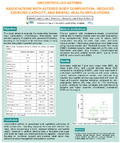
[en] Objective: This study aimed to evaluate the relationship between body composition, inflammatory phenotypes, and exercise capacity in patients with uncontrolled asthma, focusing on the impact of fat and lean mass on lung function and patient-reported outcomes.
Material and Methods: Fifty-six patients with moderate-to-severe uncontrolled asthma and 14 healthy controls were recruited. Dual-energy X-ray absorptiometry (DXA) was used to assess body composition, including fat mass, lean mass, and bone mineral content. Inflammatory phenotypes were determined using induced sputum and fractional exhaled nitric oxide (FeNO). Exercise capacity was measured via VO₂ max, and spirometry evaluated lung function. Patient-reported outcomes included asthma control (ACT), quality of life (AQLQ), and mental health (HAD).
Results: Asthmatics exhibited higher body mass index (BMI), fat mass index (FMI), and visceral adipose tissue (VAT) compared to controls (p<0.0001). Lean mass was lower in asthmatics (p=0.0012) and correlated with better asthma control, reduced depression scores, and improved lung function. Eosinophilic asthma was associated with lower fat mass and superior exercise tolerance compared to non-eosinophilic asthma (VO₂ max: 20.7 vs 17.3 mL/min/kg, p=0.04). Increased fat mass correlated with restrictive lung patterns and higher systemic inflammatory biomarkers (CRP and fibrinogen).
Conclusion: Uncontrolled asthma is associated with significant alterations in body composition, including increased fat mass and reduced lean mass, which impact lung function, exercise tolerance, and mental health. Eosinophilic asthma demonstrates a favorable phenotype with lower fat mass and improved exercise capacity. Interventions focusing on nutritional support and physical rehabilitation may enhance disease management and patient outcomes.
Title :
UNCONTROLLED ASTHMA: ASSOCIATIONS WITH ALTERED BODY COMPOSITION, REDUCED EXERCISE CAPACITY, AND MENTAL HEALTH IMPLICATIONS