Abstract :
[en] The architecture of healthcare environments significantly impacts patient, caregiver and staff well-being (Alvaro et al. 2016). Yet, traditional hospital designs often result in sterile, unwelcoming spaces (Sadek & Willis 2022). This distance leads care environments to appear as a threat, a strangeness in the life course of patients (Periano 2024). In Belgium, cancer care facilities highlight these challenges, with traditional hospital aisles contrasted against emerging models like wellness-integrated centers and walk-in houses inspired by Maggie’s Centres. These innovative typologies emphasize familiarity, comfort, and community, signaling a shift toward more patient-centered care environments (Martin et al. 2019).
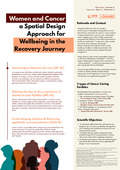
The WOmanhood and cancer: Nurturing spatial DEsign for Recovery (WONDER) research project examines how spatial design affects the experiences of Patients, Caregivers (Formal and Informal), and Staff (PCFIS) in cancer care facilities. Focusing on women’s post-treatment recovery, it investigates the relationship between design, body image, and expressions of (feminine) identity, alongside the needs of caregivers and staff. The WONDER project addresses two core questions:
(i) What architectural factors positively or negatively impact PCFIS experiences?
(ii) How can these factors be systematically integrated into design processes, balancing desirability, feasibility, and viability constraints?
The research is structured into five interconnected work packages combining qualitative methodologies and participatory approaches. WP0 focuses on preparatory groundwork, including a systematic literature review, ethical committee approvals, and the establishment of research fields. WP1 builds the theoretical foundation through a research stay at Maggie’s Dundee, enabling an in-depth study of its cancer care design principles and their relevance to the Belgian context. WP2 involves field observation across three distinct typologies of cancer care sites in Belgium: traditional hospital oncology aisles; wellness-integrated hospital centers (which blend clinical care with elements of well-being) and Walk-In houses, offering community-oriented, non-institutional spaces for support and recovery. Over 18 months, participatory and visual research methods will document PCFIS lived experiences within these diverse settings and their unique spatial dynamics.
WP3 eventually deploys co-design workshops to engage PCFIS stakeholders in collaboratively developing practical and inclusive design solutions tailored to these typologies. WP4 focuses on operationalizing those solutions, including building code suggestions and a portfolio of adaptable design guidelines, validated through focus groups and aimed at diverse scales of implementation.
By articulating PCFIS experiences and participatory design, WONDER bridges research and practice to redefine cancer care environments. The project delivers actionable recommendations and adaptable solutions for the different typologies, fostering recovery, dignity, and inclusivity in healthcare design.