Abstract :
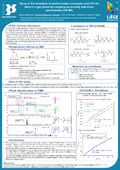
[en] Per- and polyfluoroalkyl substances (PFASs) are emerging pollutants of great concern, with over 5,000 compounds currently reported. Non-targeted analyses of these substances by liquid chromatography (LC) coupled to high-resolution mass spectrometry (HRMS) remain challenging due to the possible presence of numerous isobars and isomers, and the low number of available analytical standards. In this regard, the coupling of ion mobility spectrometry (IMS) to conventional LC-HMRS offers new perspectives for PFAS analysis due to the additional IMS separation dimension. Furthermore, the structural descriptor obtained from the collision cross-section (CCS) that can be calculated from the measured ion mobility provides an additional identification parameter. In addition, CCS-m/z trendlines are observed for compounds with repeating units, such as polymers or PFASs, and can increase confidence in identifying homologs. When trapped IMS (TIMS) is coupled to LC-MS to analyze legacy perfluoroalkyl carboxylic acids (PFCAs), multiple mobility peaks are observed at the m/z of a single deprotonated ion, preventing the determination of an unambiguous CCS as an identifier. Of the peaks detected in the mobilogram of a deprotonated PFCA ion, the one with the lowest CCS was confidently assigned to the deprotonated PFCA ion in its monomeric form. The peak with the highest CCS was assigned to a homodimeric PFCA ion ([2M-H]-) that existed prior to ion mobility separation and could dissociated after mobility separation into the corresponding deprotonated ion ([M-H]-). All detected monomeric PFCAs shared the same linear relationship between CCS and m/z, suggesting that the addition of CF2 units induces a growth of the ion in a cylindric shape with a constant diameter (Haler et al., JASMS 2022 33(2):273-283). For the dimeric PFCA ions, the slope of the trendline was lower than for the corresponding monomers. Furthermore, using CCS values of larger dimers, obtained from a previously reported drift tube IMS database, the CCS-m/z trendline deviated from linearity and was best fitted with a power regression model. This suggests that the proton-bound PFCA homodimer more likely adopts a V-shape with the proton bridging the carboxylate extremities, instead of a cylindric shape. Finally, these trendlines were obtained using three different ion mobility instruments: drift tube, traveling wave and trapped ion mobility spectrometers (DTIMS, TWIMS and TIMS) and compared. If there is any difference in ion heating during ion mobility separation (Morsa et al., Anal. Chem. 2011 83(14):5775-5782) between the IMS instruments mentioned, this should influence the overall shape of the ions, leading to different CCS-m/z trendlines.