Keywords :
Walking, perception, pedestrians, urbain landscape, Bejaia
Abstract :
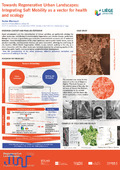
[en] Since the mid-20th century, the increase in automobile mobility and the emergence of lifestyle diseases, such as stress and obesity due to a lack of physical activity, have highlighted the need for scientific answers adapted. Researchers are increasingly turning to soft mobility, with an emphasis on modes of movement that encourage an active posture of the user, thus exploiting muscular energy and taking into account the individual mental and perceptual state. in space experience. This perspective is enriched by a multitude of disciplines, including architecture, philosophy, anthropology, geography, and others, which explore the interactions between the body and space. In an effort to encourage active mobility, cities are improving the quality of public spaces, promoting walking and cycling through initiatives such as pedestrianization and the creation of cycle paths. The Covid-19 pandemic has further accentuated the role of walking as a preferred mode of mobility, enabling social distancing.
However, despite the increase in pedestrian spaces, their success in terms of attendance is not always there, calling into question their "walkability". Research on this subject has often favored quantitative approaches, considering factors such as connectivity or safety, but these elements alone do not guarantee an incentive to walk. Indeed, the landscape quality of the urban environment plays a crucial role, requiring deeper exploration to understand how it influences walkability in urban environments. Through an in situ approach, based on detailed surveys and participatory observation, this research aims to identify factors characterizing urban environments that promote or hinder walking. By comparatively studying the old and new city of Bejaia (Algeria), she explores how spatial configurations and landscape features can encourage or discourage walking, providing insights into the interrelationships between spatial quality and walkability.
Name of the research project :
New European Bauhaus (NEB) , European Green Deal