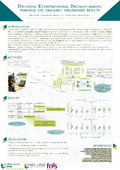
[en] Entrepreneurship scholars have advocated adopting cognitive neuroscience tools to better understand how entrepreneurs think, perceive, and make decisions under uncertainty. To this end, we aimed to identify the behavioural differences in opportunity recognition that have been linked to entrepreneurial decision-making, through an exploratory eye-tracking study in young entrepreneurs. We hypothesized that students enrolled in entrepreneurship-related master’s degree training will show higher opportunity recognition than those enrolled in managerial business courses (MBA). Student participants (N=40), divided into two groups (Entrepreneurs and MBA, respectively) had to evaluate the feasibility of fictional business pitches presented as S-W-O-T analyses— under free-viewing, and limited-time conditions. Between and within group differences were assessed in each condition with 2-way mixed design ANOVA on the following eye-tracking parameters: fixation duration (total and mean), first-fixation S-W-O-T category, and fixation counts. We observed lower total/mean fixation duration and fixation counts in the entrepreneurial group in the limited-time condition, but these differences were not statistically significant (p= 0.146 and p = 0.136, respectively). For S-W-O-T categories, the MBA group showed higher first-fixation frequency towards the opportunity (and strength) fields, in the fixed-time condition. These results are contrary to our hypothesis of higher opportunity recognition in the entrepreneur group. It can be posited that the student entrepreneur group yet lacks the experience of habitual entrepreneurs with a knack for opportunity recognition as demonstrated in the literature. This paves the way for more extensive studies to capture the influences of entrepreneurial experience on entrepreneurship cognition and decision-making.
Disciplines :
Neurosciences & behavior General management, entrepreneurship & organizational theory
Author, co-author :
Antony, Harry ; Université de Liège - ULiège > Département de Psychologie > Neuropsychologie de l'adulte ; Université de Liège - ULiège > GIGA > GIGA CRC In vivo Imaging - Aging & Memory
Alâadany, Elena; ULiège - University of Liège [BE] > HEC Liège: UER > UER Management: Gestion internationale - Entrepreneuriat
Le Petit, Marine ; Université de Liège - ULiège > Département de Psychologie > Neuropsychologie de l'adulte ; Université de Liège - ULiège > GIGA > GIGA CRC In vivo Imaging - Aging & Memory
Ooms, Frédéric ; Université de Liège - ULiège > HEC Liège Research > HEC Liège Research: Strategy & Performance for the Society ; Université de Liège - ULiège > HEC Liège : UER > UER Management: Gestion internationale - Entrepreneuriat
Collette, Fabienne ; Université de Liège - ULiège > Département de Psychologie > Neuropsychologie de l'adulte ; Université de Liège - ULiège > GIGA > GIGA CRC In vivo Imaging - Aging & Memory
Language :
English
Title :
Decoding entrepreneurial decision-making through eye tracking: Preliminary Results
Publication date :
30 May 2024
Event name :
The Annual Conference of Belgian Association for Psychological Sciences (BAPS)
Event organizer :
Belgian Association for Psychological Sciences (BAPS)