Central Africa; Congo Basin; Cameroon; Republic of the Congo; Central African Republic; charcoal analysis; soil charcoal; oil palm; tropical forest; forest evolution
Résumé :
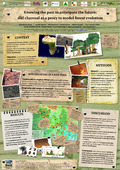
[en] Tropical forests of Central Africa constitute the second most important block of moist forest of the world. However little is known about their past evolution. Indeed, determining the past specific composition of these forests could allow modeling their evolution over time and providing data about their resilience capacity facing global change. To do this, we performed a pedoanthracological analysis in the semi-deciduous forests of southeastern Cameroon. We excavated test pits in 53 plots of botanical inventory along a gradient of vegetation, quantified wood charcoals by layers of 10 cm, identify the species present in charcoals, dated the charcoals by the radiocarbon method, then built up sequences including present forest composition. Results show that repeated fire events occurred across the study area during the last 2500 years. These disturbances are likely human-induced regarding evidence of anthropogenic activities (e.g. potsherds). Nonetheless the past specific composition does not strongly differ from the current one except for the oldest layers related to the major dry climatic event of 2500 BP. We conclude that moist forests have a good resilience capacity regarding moderate disturbances but were and will be deeply impacted by climate change.
Disciplines :
Archéologie Sciences de l’environnement & écologie Biologie végétale (sciences végétales, sylviculture, mycologie...) Arts & sciences humaines: Multidisciplinaire, généralités & autres Histoire Sciences du vivant: Multidisciplinaire, généralités & autres
Daïnou, Kasso ; Université de Liège > Ingénierie des biosystèmes (Biose) > Laboratoire de Foresterie des régions trop. et subtropicales
Fayolle, Adeline ; Université de Liège > Ingénierie des biosystèmes (Biose) > Gestion des ressources forestières et des milieux naturels
Gillet, Jean-François; Nature Forest Environment
Gorel, Anaïs ; Université de Liège > Ingénierie des biosystèmes (Biose) > Gestion des ressources forestières et des milieux naturels
Hardy, Olivier J; Université Libre de Bruxelles - ULB
Vleminckx, Jason; Université Libre de Bruxelles - ULB
Doucet, Jean-Louis ; Université de Liège > Ingénierie des biosystèmes (Biose) > Laboratoire de Foresterie des régions trop. et subtropicales
Beeckman, Hans; Musée royal de l'Afrique centrale
Langue du document :
Anglais
Titre :
Knowing the past to anticipate the future: soil charcoal as a proxy to model forest evolution
Date de publication/diffusion :
octobre 2014
Nombre de pages :
A0
Nom de la manifestation :
XXIV IUFRO World Congress: Sustaining Forests, Sustaining People: The Role of Research
Organisateur de la manifestation :
IUFRO
Lieu de la manifestation :
Salt Lake City, Etats-Unis
Date de la manifestation :
5-11 October 2014
Manifestation à portée :
International
Organisme subsidiant :
FRIA - Fonds pour la Formation à la Recherche dans l'Industrie et dans l'Agriculture FRFC - Fonds de la Recherche Fondamentale Collective F.R.S.-FNRS - Fonds de la Recherche Scientifique