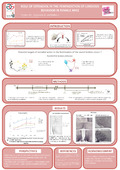
[en] The classic theory of mammalian brain and behavioral sexual differentiation holds that an organizational action of testosterone, secreted perinatally by the male’s testes, controls male-typical aspects of brain and behavioral development, whereas no active perinatal sex hormone signaling is required for female-typical differentiation. However, it has recently been shown using aromatase knock out (ArKO) mice, which are deprived of estradiol due to a targeted mutation in the aromatase gene, that estradiol may also actively contribute to the differentiation of female-typical aspects of behavior over a specific pre-pubertal period. Female ArKO mice showed significantly lower levels of lordosis behavior than wild type controls following adult ovariectomy and treatment with ovarian hormones. This deficit was restored by treating female ArKO mice with estradiol benzoate between postnatal days 15 and 25. However, the mechanism by which estradiol acts prepubertally in female mice to feminize lordosis behavior remains to be elucidated. Therefore, in a first attempt, we are determining which neuropeptides are in particularly sensitive to estradiol action over the prepubertal period. We will focus on neuropeptides which have been shown to be implicated in lordosis behavior. Studies by the group of Micevych have proposed an important role for NPY and beta-endorphin (B-END) neurons in the arcuate nucleus (ARC) in the estradiol-mediated activation of lordosis behavior in female rats. An in vitro study recently showed that kisspeptin directly activates ARC B-END neurons. This is particularly interesting since unpublished results from our laboratory showed that Kp neurons are directly involved in the expression of lordosis behavior. We are thus currently determining the expression of NPY, B-END, and kisspeptin in the ARC as well as μ-opioid receptors MORs in the MPN over the prepubertal period and their possible modulation by prepubertal estradiol treatment.