Abstract :
[en] Introduction: Bleeding in the postoperative period of cardiac surgery is not infrequent. Mediastinal bleeding is usually collected in a chest drainage system and discarded. Nevertheless, this blood could potentially be managed with a cell salvage device during the first six postoperative hours. This practice is generally performed only in case of a surgical re-exploration for massive bleeding and may contribute to decreased allogeneic transfusion. But in case of postoperative coagulopathy requiring medical treatment, re-exploration is usually postponed and consequently, collected blood is discarded. Therefore, chest drainage systems combined with a cell salvage option could optimize the management of blood losses and transfusions in the postoperative period, regardless of any surgical re-exploration. The aim of this study is to assess the effectiveness of such a system during the postoperative period of cardiac surgery, in patient at high risk of bleeding.
Method : During a 6 months period, the CardioPAT® (Haemonetics) device was used in all cardiac surgery patients at high risk of postoperative bleeding. The following data were prospectively collected: hemoglobin level, bleeding volume, volume of autologous washed red blood cell transfused by the CardioPAT® (WRBC), volume of allogeneic red blood cell (RBC), fresh frozen plasma (FFP) or platelets (PT) transfused and surgical re-exploration.
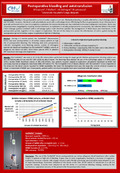
Results : The CardioPAT® was used in 16 patients during the target period. Mean postoperative bleeding volume was 338±337mL after 1 hour and 820±727mL after 6 hours. The cell salvage option was used in 9 (56%) cases and mean WRBC transfused volume was 153±212mL. One patient required surgical re-exploration. All patients transfused by WRBC received previously an allogeneic transfusion (RBC, FFP and/or PT). The hemoglobin level of blood collected in the CardioPAT® device impacted on the delay and the blood volume required for WRBC availability; lower was the hemoglobin level, larger was the volume of blood required to obtain a concentrate of WRBC. Consequently, patients with a very low hemoglobin level were anyway transfused with RBC.
Conclusion : The CardioPAT® device can reduce allogeneic blood transfusion after cardiac surgery in patients at high risk of bleeding. It gives time to treat coagulopathy, leading to a decrease of surgical re-exploration. However, a device with a larger reservoir and with a flexible processing speed would be more accurate in case of major haemorrhage.
Systematic utilisation of this device at the time of FFP and/or PT transfusion is a safe but expensive strategy. It seems more accurate to use this device in a permissive bleeding strategy, waiting for the spontaneous coagulation recovery of the patient, in the first postoperative hours.
Name of the research project :
L'épargne sanguine à travers l'itinéraire clinique du patient opéré cardiaque